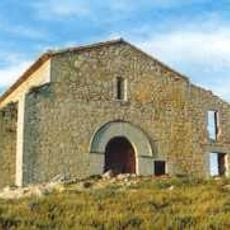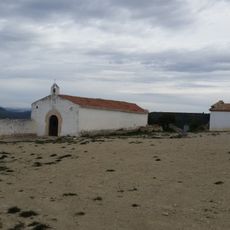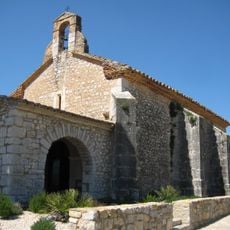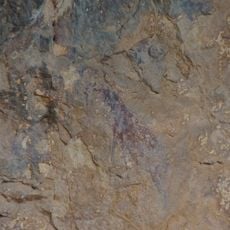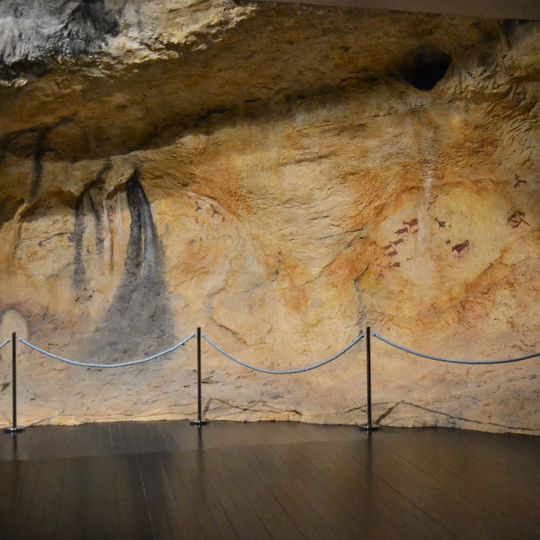
Cova dels Cavalls, Prehistoric cave entrance in Tírig, Spain.
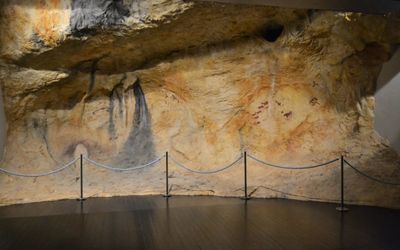
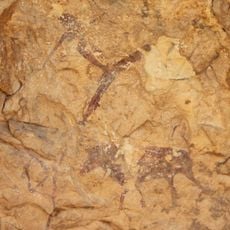
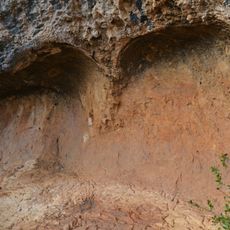
Cueva de los Caballos, or Cova dels Cavalls, is a large rock shelter on the left bank of the Barranco de la Valltorta, in the municipality of Tírig, at about 500 m above sea level on the Roca de les Estàbigues. Its wall holds the painted scene known as the Cacería de cervatillos: nine deer, mostly hinds and fawns, driven toward four archers who shoot and wound several of them. In 1917 the shelter still held 57 painted figures.
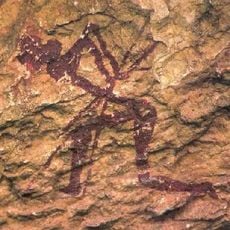
Albert Roda found the cave in 1917; that same year Hugo Obermaier and Paul Wernert came to study its paintings. It was declared a historical-artistic monument in 1924 and a World Heritage Site in 1998. In 1917 the shelter held 57 figures, many later torn off or destroyed by vandalism; only one archer survives, kept at the Casa Museu Duran i Sanpere in Cervera. Restoration and documentation campaigns followed in 1994 and 1998.
The painted panel is known as the Cacería de cervatillos: nine deer, mostly does and fawns, are driven toward four archers who shoot and wound several of them. In 1917 the shelter held 57 figures; vandalism in the 1920s destroyed most, and only one archer survives, kept at the Casa Museu Duran i Sanpere in Cervera.
Visitors should wear sturdy footwear and bring a flashlight to explore the cave safely. Guided tours are available and provide helpful information about the geological formations and archaeological discoveries.
In 1917 the shelter held 57 painted figures; vandalism in the following years saw many of them levered off the rock. Only one archer from the deer hunt survives, kept at the Casa Museu Duran i Sanpere in Cervera, Lleida.
The community of curious travelers
AroundUs brings together thousands of curated places, local tips, and hidden gems, enriched daily by 94,842 contributors worldwide.