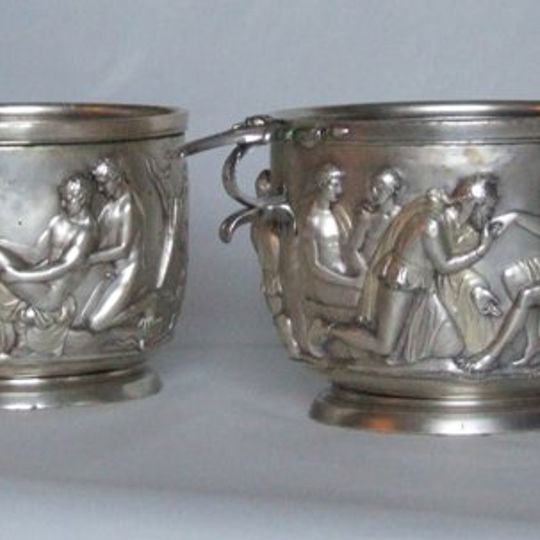
Hoby treasure, Iron Age burial site in Lolland, Denmark
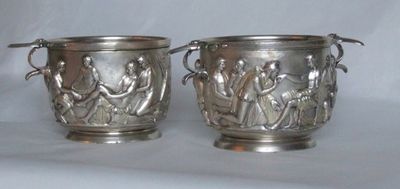
The Hoby treasure is a burial find from the first century with Roman silver vessels, two large drinking cups carved with scenes from Homer's Iliad, and items made of gold and bronze. The collection was discovered in 1920 and is now held in the national collection.
The grave dates to the first century CE and belonged to a local leader who received luxury goods through Roman trade networks. The discovery shows how far Roman commerce extended into the northern lands.
The silver drinking cups display foreign craftsmanship traditions and reveal connections to distant cultures. Such imported goods show how a local leader adorned himself with items from far away.
The pieces are displayed in the National Museum of Denmark and open for public viewing. Plan your visit during the museum's regular opening hours to see the collection.
Tooth analysis of the buried man reveals he was from the local area and died between 25 and 35 years old. These biological clues provide insight into his life and social standing.
The community of curious travelers
AroundUs brings together thousands of curated places, local tips, and hidden gems, enriched daily by 91,373 contributors worldwide.