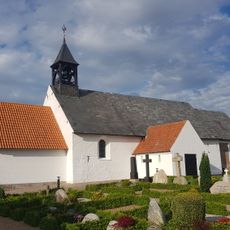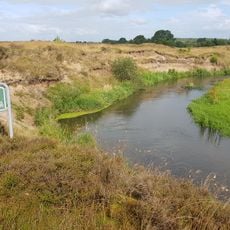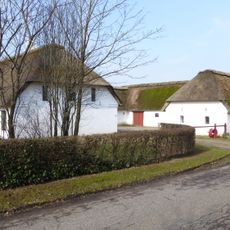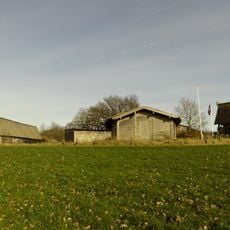
Gram Clay Pit, Paleontology museum and clay pit in Haderslev Municipality, Denmark.
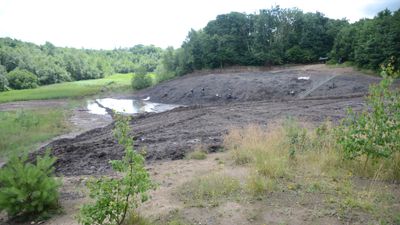
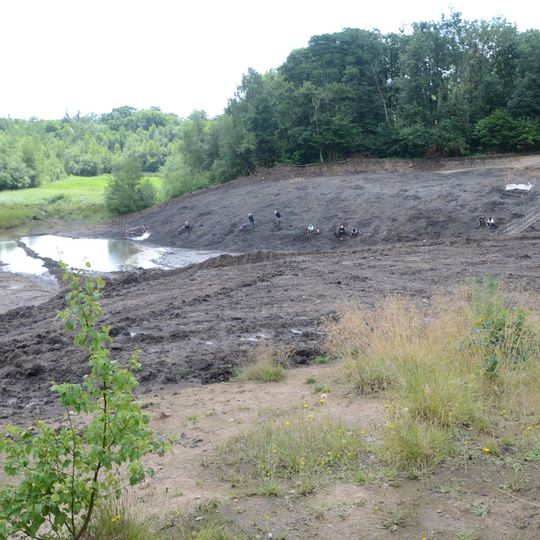
The Gram Clay Pit is a museum and active excavation site in Haderslev where visitors can dig through sediment layers revealing an ancient seabed with marine fossils from 10 million years ago. The site displays how different geological layers stack on top of each other, exposing materials from various time periods.
The site originally began as a tile production facility before transforming into a museum housing Denmark's most complete fossil collection from the Gram Formation. This transition turned an industrial heritage site into a place for scientific discovery.
The museum displays whale skeletons and teeth from the prehistoric shark Carcharocles Megalodon, showing visitors what marine life once inhabited this region. These specimens help people understand the ocean that covered this land millions of years ago.
Visitors can receive excavation tools and guidance while participating in educational programs during regular museum hours, with free parking available on site. It is best to wear appropriate clothing and footwear, as you will be working outdoors where conditions can be muddy or wet.
The clay pit contains a 35-meter-thick layer of fine-grained clay deposited when the area was submerged under an ocean 50-100 meters deep. This exceptional layer thickness made the location ideal both for fossil collection and for early tile extraction.
The community of curious travelers
AroundUs brings together thousands of curated places, local tips, and hidden gems, enriched daily by 92,405 contributors worldwide.