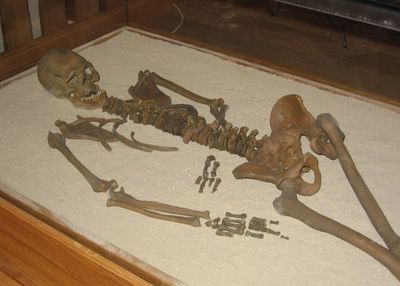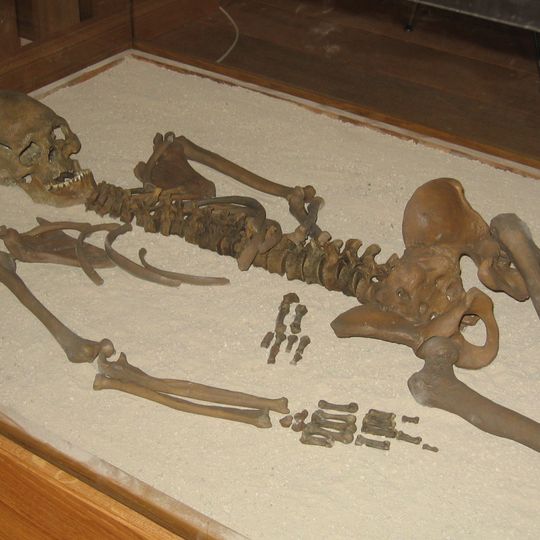
Loschbour man, Prehistoric human skeleton near Mullerthal, Luxembourg.
The Loschbour man is a complete human skeleton from the Mesolithic period found in Luxembourg's Mullerthal region. The bones belonged to an adult male and provide detailed information about physical characteristics and health from that distant time.
An amateur archaeologist discovered the skeletal remains in 1935 beneath a rock shelter along a river valley. The bones date to around 8000 years ago, during a time when people had not yet settled into permanent communities.
The remains reflect how hunter-gatherers lived in this region during early prehistoric times and what their daily existence might have looked like. The skeleton helps us understand the people who first inhabited Luxembourg's valleys and forests.
The skeletal remains are displayed at the National Museum of Natural History in Luxembourg City, where visitors can view the bones in a protected setting. The displays are clearly marked and accompanied by explanatory information about the find.
Genetic analysis of the bones revealed that this individual had blue eyes and could not digest milk, traits rare among ancient populations studied today. These details make him one of the few people from that distant era whose physical characteristics are so precisely known.
The community of curious travelers
AroundUs brings together thousands of curated places, local tips, and hidden gems, enriched daily by 60,000 contributors worldwide.