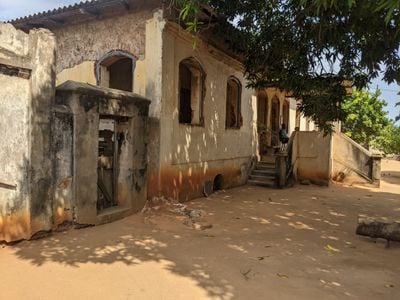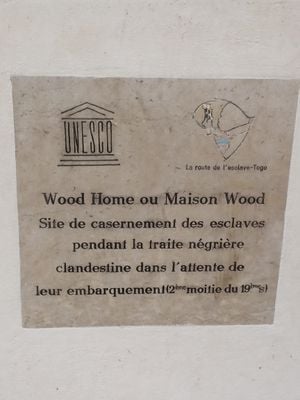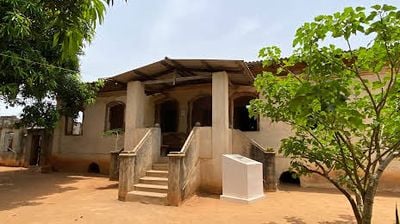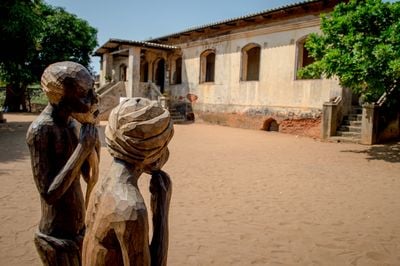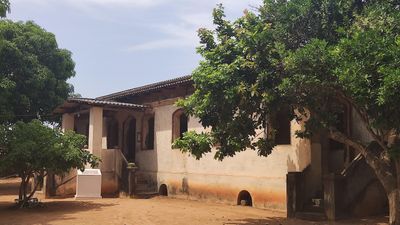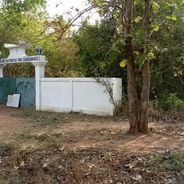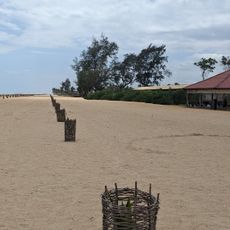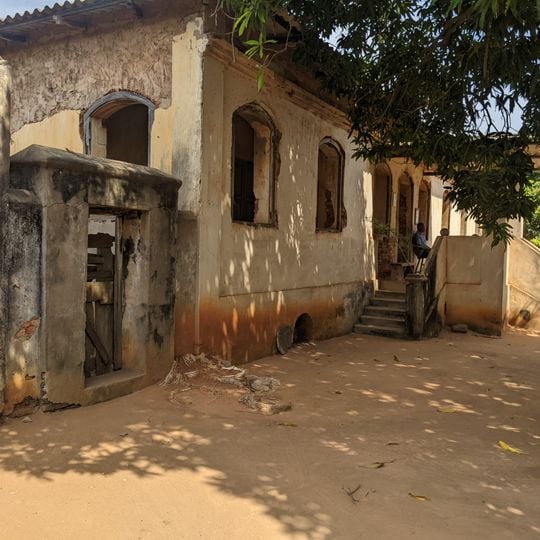
Wood Home, Slave trade memorial museum in Agbodrafo, Togo.
Wood Home is a museum building in Agbodrafo that spreads across multiple rooms, a living area, and an underground chamber spanning 21 meters in length and 10 meters in width. The structure displays Afro-Brazilian architectural features throughout its layout and construction.
A Scottish merchant named John Henry Wood built this structure in 1835 as a clandestine trading post after official abolition measures had taken effect. The building operated in this capacity until activities at the site eventually ceased.
This building was a meeting point where different cultures intersected, as European merchants used it as a trading post in an African coastal settlement. The architectural features show a blend of European construction methods and local materials that visitors can still observe today.
Visits to the site happen through guided tours that provide detailed explanations of the rooms, cellar, and a purification well called Gatovoudo. Wear comfortable shoes and prepare for uneven surfaces, as the underground areas have tight conditions.
The underground chamber stands only about 1.5 meters high, forcing people to move in just three positions: sitting, crouching, or lying down. This space shows visitors today how confined and restricted conditions were in that chamber.
Location: Région Maritime
Inception: January 1, 1835
Address: Agbodrafo, Togo
Phone: +233532968321
GPS coordinates: 6.20379,1.47685
Latest update: December 6, 2025 19:01
Togo extends from the coast of the Gulf of Guinea to forested plateaus inland. The country contains several national parks, including Fazao Malfakassa and Keran, where elephants, antelopes, and numerous bird species live. The waterfalls at Aklowa and Kpimé cascade over multiple tiers through tropical vegetation. The Koutammakou region in the northeast displays traditional clay architecture with characteristic Tatas, fortified dwellings of the Batammariba people. In Lomé, German and French colonial buildings reflect the history of the 19th and 20th centuries, while local markets like the Marché des Féticheurs present traditional practices and commerce. Mount Agou rises to 986 meters and provides views across surrounding valleys and plantations. The coastal area includes sandy beaches along the Atlantic and Lac Togo, a lagoon used for fishing and water activities. Temple ruins and shrines are distributed throughout the country, documenting the animist traditions of various ethnic groups.
Door of No Return
69.1 km
Akodessawa Fetish Market
23.8 km
Temple des Pythons
69.5 km
Fort Prinzenstein
62.8 km
Lomé Grand Market
29.2 km
Palace of the Governors
30.7 km
Basilique de l'Immaculée Conception
69.5 km
Independence Monument, Lome
30 km
Palais des congrès de Lomé
29.8 km
Villa Karo
39.5 km
Alte Landungsbrücke (Lomé)
29.5 km
Woold Homé
9 m
Museum of contemporary art in Ouidah
69.6 km
Villa Ajavon
69.6 km
Institut français du Togo
30.1 km
National Museum of Togo
29.8 km
Memorial Zomachi
69.3 km
Sacred Heart Cathedral
29.1 km
Plage de Lomé
27.9 km
Village Artisanal
29.5 km
Statue Dadjè soka
50.8 km
Mémorial du Grand Jubilé de l'an 2000
68.9 km
Vieux pont de Grand-Popo
41.6 km
Marché de Vogan
15.9 km
Grand Popo
30.1 km
Agoué plage
22.3 km
Maison AMADOTE
15.6 km
Hillacondji Beach
18.2 kmVisited this place? Tap the stars to rate it and share your experience / photos with the community! Try now! You can cancel it anytime.
Discover hidden gems everywhere you go!
From secret cafés to breathtaking viewpoints, skip the crowded tourist spots and find places that match your style. Our app makes it easy with voice search, smart filtering, route optimization, and insider tips from travelers worldwide. Download now for the complete mobile experience.
A unique approach to discovering new places❞
— Le Figaro
All the places worth exploring❞
— France Info
A tailor-made excursion in just a few clicks❞
— 20 Minutes