Duga radar, Soviet over-the-horizon radar in Vyshhorod Raion, Ukraine
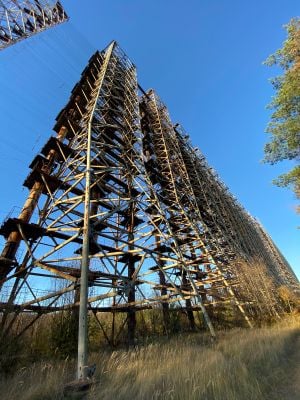
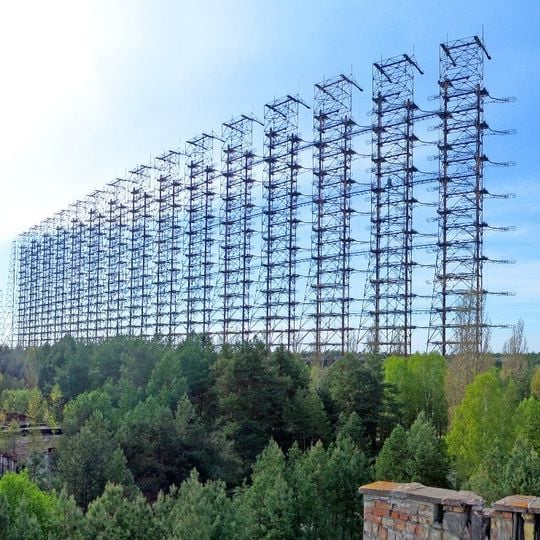
The Duga radar is an abandoned over-the-horizon radar near Chernobyl, made of two large phased-array antennas: a low-frequency array with masts 135–150 m high and 300–500 m long, and a high-frequency array about 250 m long and up to 100 m high. The steel lattice towers stand in rows behind trees, with horizontal arms and booms projecting forward.
The Duga system operated from July 1976 to December 1989. Its experimental predecessor, the Duga-1, was built outside Mykolaiv and tracked rocket launches from Baikonur Cosmodrome at 2,500 kilometres; both early radars were aimed east, toward launches flying over the Pacific toward Novaya Zemlya. The operational Duga-1 near Chernobyl used a transmitter and receiver about 60 kilometres apart.
The radar earned its nickname Russian Woodpecker because its powerful shortwave signals produced a repetitive tapping sound at 10 Hz that disrupted civilian radio broadcasts worldwide throughout the 1970s and 1980s.
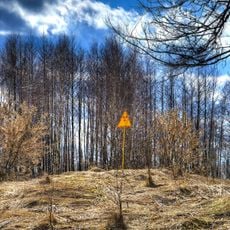
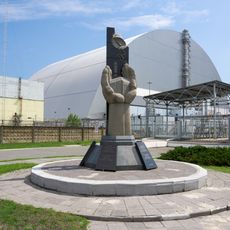
The radar stands within the Chernobyl Exclusion Zone and can be visited as part of official guided tours, offering a direct look at this Cold War military technology relic.
This system could bounce radio signals off the ionosphere to detect targets thousands of miles away, utilizing a technique that allowed surveillance beyond the visible horizon and traditional radar limits.
The community of curious travelers
AroundUs brings together thousands of curated places, local tips, and hidden gems, enriched daily by 92,055 contributors worldwide.