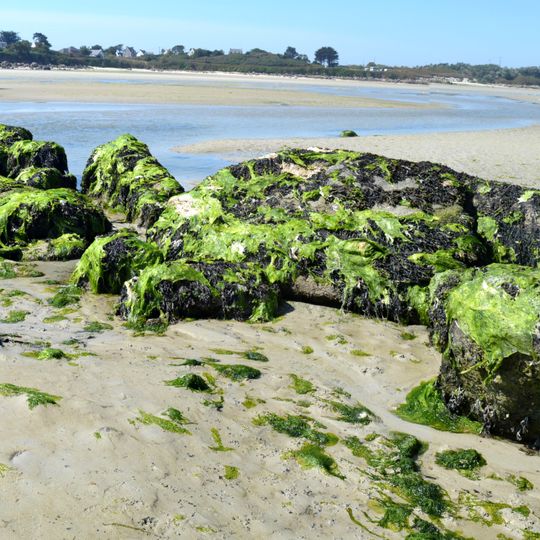
Quillimadec mouth gallery grave, Passage grave and gallery grave in Kerlouan, France
The allée couverte de l'estuaire du Quillimadec is a Neolithic passage grave and gallery grave on the coast of Kerlouan, in Brittany, France. It consists of a row of large upright stones forming a long, narrow corridor, some of which are still standing while others have fallen.
The monument was built during the Neolithic period, likely between 3500 and 2800 BCE, and was probably used as a burial site by local communities. It was rediscovered in 1913 by Alfred Devoir, who carried out the first archaeological observations of the site.
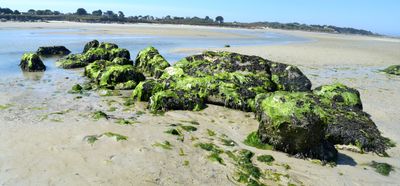
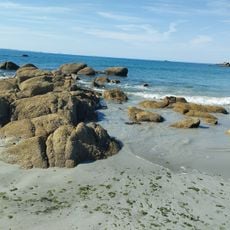
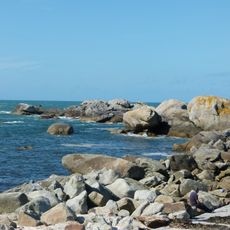
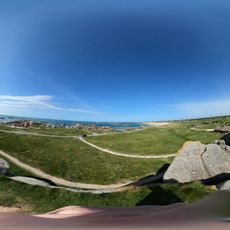
The site is reached by following a coastal path with uneven, rocky ground, so sturdy footwear is a good idea. At high tide, the area around the monument can be partly flooded, so it is worth checking tide times before visiting.
Some of the stones carry carved geometric marks, including small circles and lines left by the people who built the monument. Their exact meaning remains unknown today.
The community of curious travelers
AroundUs brings together thousands of curated places, local tips, and hidden gems, enriched daily by 60,000 contributors worldwide.