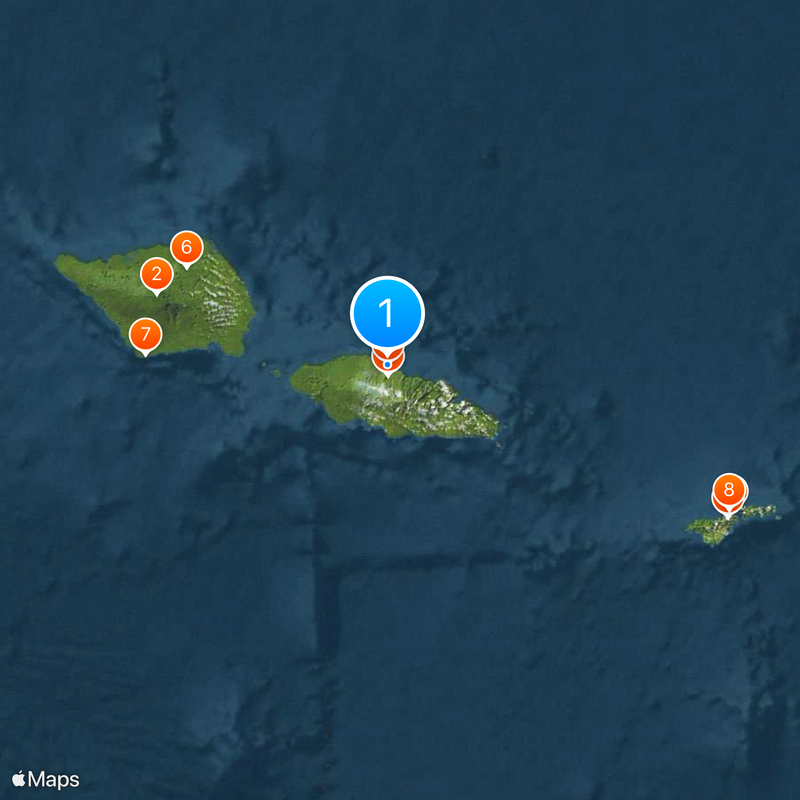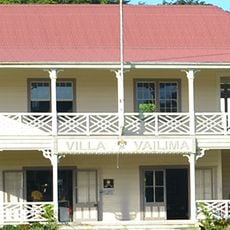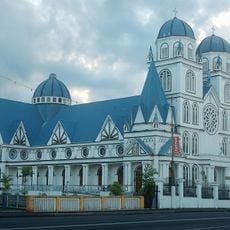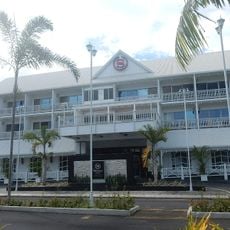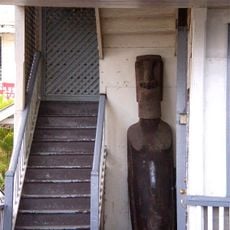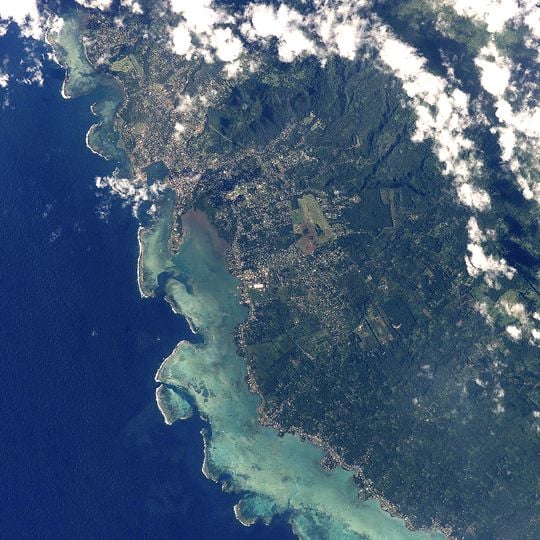
Apia, Capital city in Upolu Island, Samoa
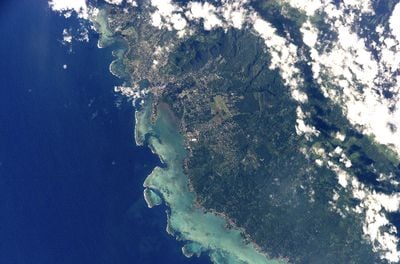
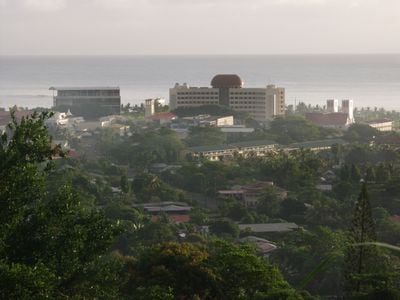
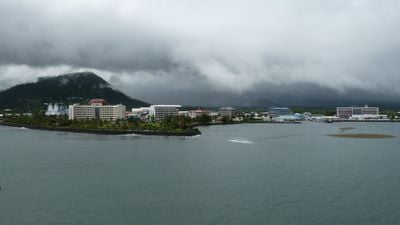
Apia is a city on the northern shore of Upolu Island in Samoa and spreads around a natural harbor with the Vaisigano River flowing through its center. The streets run along the coastline and then move inland, where low buildings stand among palm trees and tropical plants.
Colonists from Germany took over administration of the city from 1900 to 1914, before New Zealand gained control after World War I. The city became the capital of the new state after Samoa gained independence in 1962.
The name comes from the Samoan language and refers to an opening or passage that fits the natural shape of the bay. Many residents still wear traditional lavalava wrap skirts as they walk through the streets and across the markets.
The center is near Beach Road and can be explored on foot, while public buses run to nearby villages outside the city. Most shops and offices close on Sunday, when public life is largely at rest.
A police band performs on weekday mornings along Beach Road and plays marches that have continued since the colonial period. The grave of Scottish writer Robert Louis Stevenson sits on a hill above the city and offers a wide view over the bay.
The community of curious travelers
AroundUs brings together thousands of curated places, local tips, and hidden gems, enriched daily by 91,260 contributors worldwide.