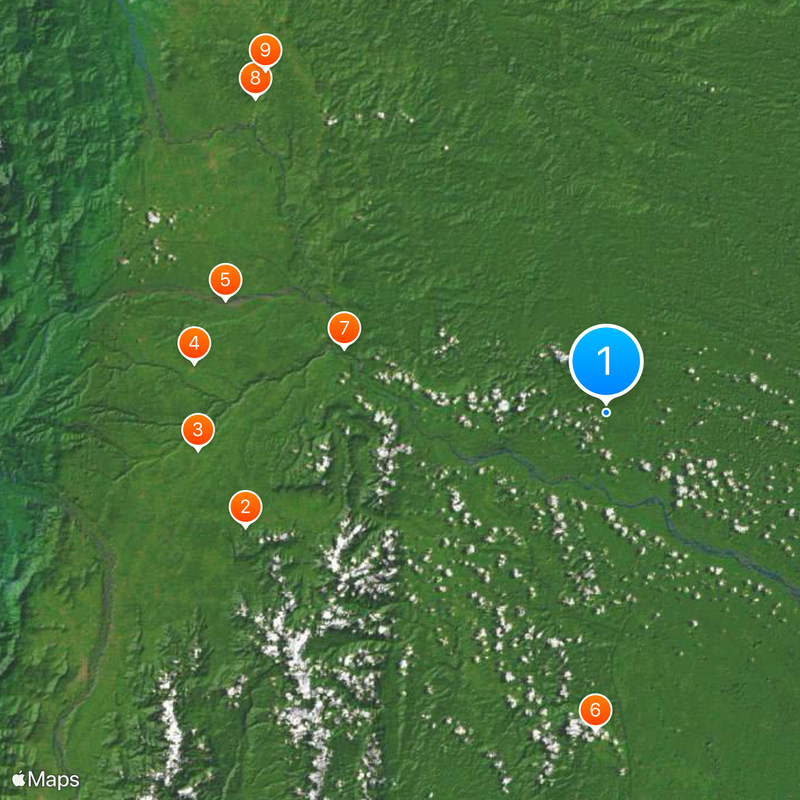
Geography of Ecuador, Natural landscape formation in western South America
This country sits on the equator and contains four main zones: lowland plains along the Pacific shore, mountain ranges running north to south through the center, dense jungle in the east, and volcanic islands offshore. These regions lie remarkably close together despite their contrasting environments and climates.
The mountain range formed through plate collision over millions of years, creating peaks above 6000 meters (19,685 feet) that run the length of the country. This uplift separated the coastal zone from the rainforest basin and shaped the three mainland regions visible today.
The diverse geographical regions of Ecuador support different agricultural practices, from banana plantations on the coast to traditional highland farming in the Sierra.
Traveling between regions means adjusting to altitude changes from sea level to high mountains within short distances. Pack clothing for different climates since temperatures and weather shift dramatically depending on which zone you enter.
Some slopes on the eastern mountain edge receive over 5000 millimeters (197 inches) of rain each year, making them among the wettest places on Earth. This happens when moist air from the rainforest climbs the mountain flanks and releases its water in heavy downpours.
The community of curious travelers
AroundUs brings together thousands of curated places, local tips, and hidden gems, enriched daily by 91,855 contributors worldwide.