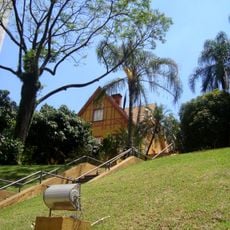
House of Sítio de Morrinhos, Archaeological site in Jardim São Bento, São Paulo, Brazil.
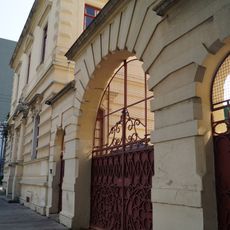
Sítio Morrinhos is an archaeological site in São Paulo featuring a main residence and outbuildings constructed entirely from rammed earth, a traditional building method from that era. The compound covers a large property and displays how rural dwellings were structured during the colonial period.
The main house was built in 1702, a date carved on its entrance door, and is attributed to José de Góis Morais. In 1902 the Count of Milleville lost the property at auction; the Paulistan Pedagogical Association, representing São Bento Monastery, bought it. The monastery used it as a weekend retreat until the late 1940s, when Camargo Corrêa acquired it. In 1948 Sebastião Ferraz de Camargo donated the site to the city, allowing the surrounding Jardim São Bento subdivision.
The name Jardim São Bento, given to the surrounding neighbourhood in 1948, honours the monastery that owned the farm from 1902 to the late 1940s. The main house keeps five ground-floor rooms and a porch, with a single small bedroom, the camarinha, above. The attached brick buildings served as senzalas, slave quarters, for the enslaved workers who made pottery, grew rice and raised cattle.
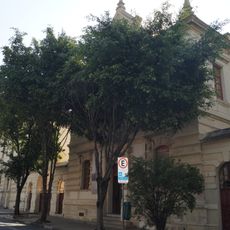
The site sits on Rua Santo Anselmo in Jardim São Bento, Casa Verde, in São Paulo's North Zone, inside a large green area with many trees. The main house has five rooms on the ground floor, a porch and a small upper bedroom, with annexes of brick masonry. The complex is often visited by school groups, and architecture students make up most of the roughly 570 visitors per month.
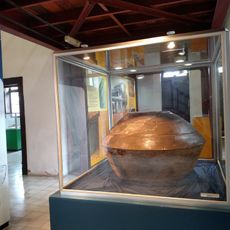
The on-site archaeology center holds approximately one million artifacts documenting human occupation and settlement patterns across thousands of years. This vast collection allows visitors to trace how the region was inhabited and used from prehistoric times through the present day.
The community of curious travelers
AroundUs brings together thousands of curated places, local tips, and hidden gems, enriched daily by 94,485 contributors worldwide.