Lake Eyasi, Shallow salt lake in northern Tanzania.
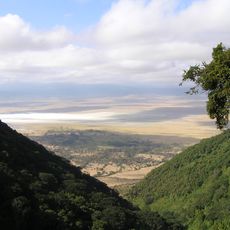
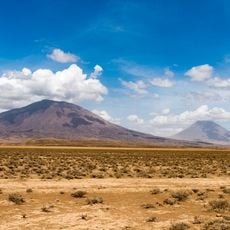
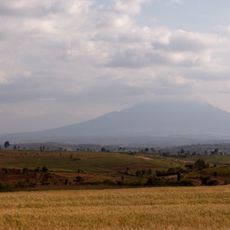
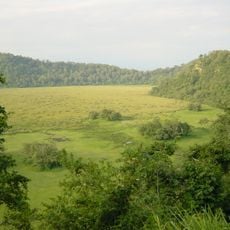
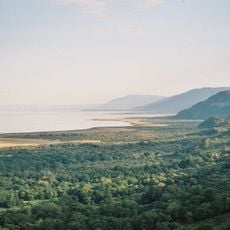
Lake Eyasi is a shallow, seasonal salt lake on the floor of the Great Rift Valley in Karatu District, Arusha Region, Tanzania. It is elongated southwest to northeast in the Eyasi-Wembere branch of the rift, just south of Serengeti National Park and southwest of Ngorongoro Crater. Its main inflow, the Sibiti River, enters at the southwestern end, and depths usually stay under one metre.
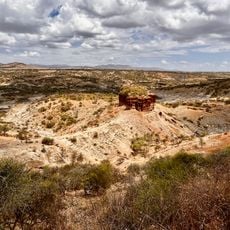
The Mumba Cave near the lake contains archaeological remains from the Stone Age, revealing early human presence in the region. This site demonstrates that people have inhabited the area for thousands of years.
The Hadza are the lake's indigenous inhabitants, living along most of its perimeter; camps are few along the Serengeti shore, which is Maasai territory. The Datooga live in the Yaeda Valley to the southeast, the Isanzu to the south and the Sukuma across the Sibiti River. Iraqw farmers have moved increasingly to the Baray, now East Africa's main onion-growing region.
The lake lies on the floor of the Great Rift Valley at the base of the Serengeti Plateau, southwest of the Ngorongoro Crater; the Sibiti River enters at the southwestern end. In dry years the water can dry up almost entirely, letting Datooga herders and Hadza foragers cross on foot, while in El Niño years it can flood its banks. Depths usually stay under one metre even in wet periods.
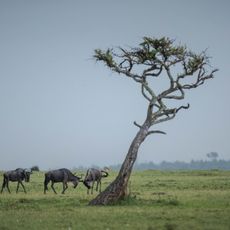
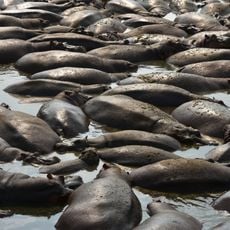
During wetter months, large flocks of pink flamingos arrive at the shore, drawn to the lake's salty water for feeding. The lake occasionally hosts hippos when water levels rise after heavy rainfall in certain years.
The community of curious travelers
AroundUs brings together thousands of curated places, local tips, and hidden gems, enriched daily by 94,251 contributors worldwide.