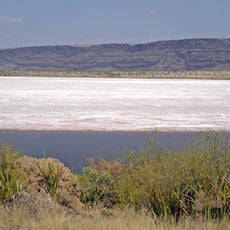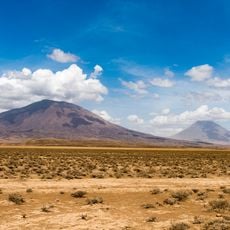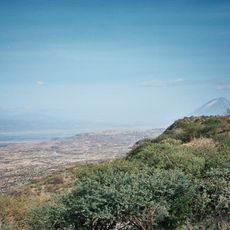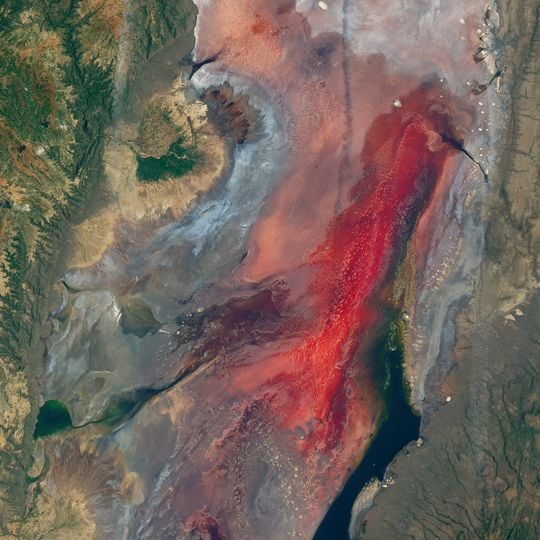
Lake Natron, Alkaline lake in northern Tanzania
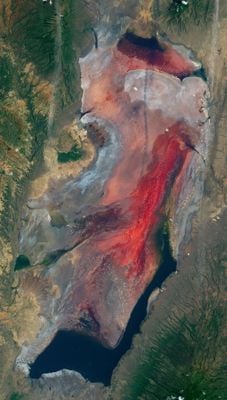
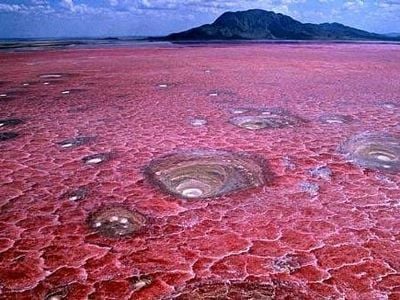
Spanning 35 miles (57 kilometers) in length, the waters display deep red hues created by salt-tolerant microorganisms and accumulated mineral deposits from surrounding volcanic terrain.
Over thousands of years, ongoing evaporation combined with limited water outflow transformed this body from a freshwater system into a shallow alkaline basin within the East African Rift Valley.
The area provides habitat for Maasai communities who have maintained their traditional herding routes along the shoreline for generations and offer visitors insight into their way of life.
Access works best between June and November when dirt roads remain passable and water levels drop, revealing flamingo nesting sites along the southern shoreline near Engare Sero village.
Over one million lesser flamingos depend on these waters as their primary global breeding ground, with the extreme alkalinity deterring predators from reaching nesting areas on salt crusts.
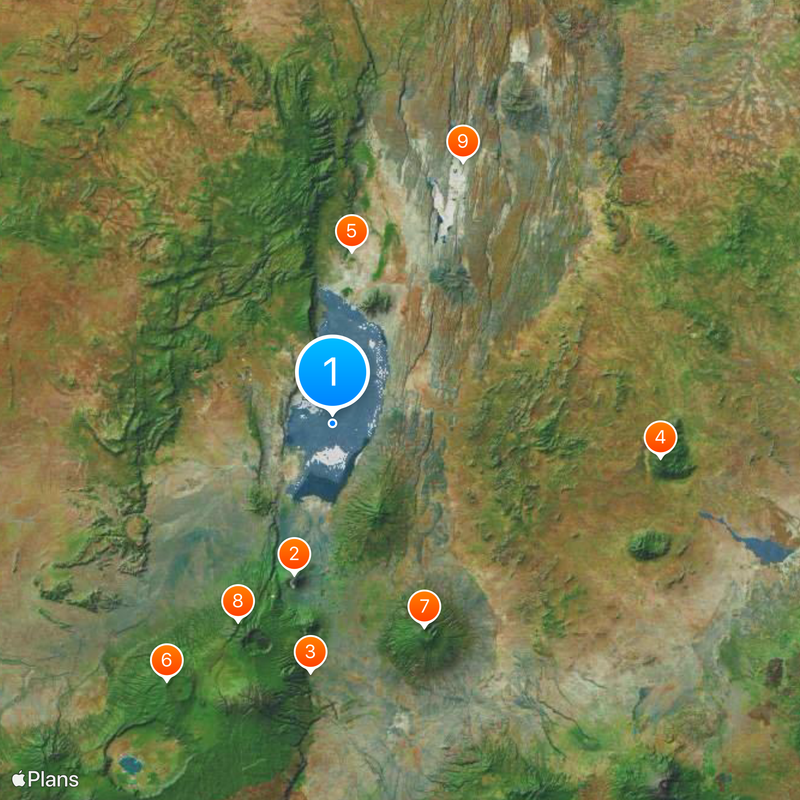
Location: Ngorongoro
Elevation above the sea: 600 m
Address: Lake Natron
GPS coordinates: -2.41667,36.00000
Latest update: December 2, 2025 10:18
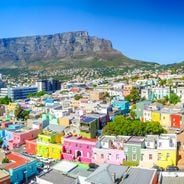
Earth displays its color range at numerous sites, from geological formations to human-built environments. The selection includes locations on six continents, where natural processes or cultural traditions have resulted in prominent visual displays. The Danxia mountains in China's Gansu province show layered sedimentary rock formations in reds, oranges and yellows, while Arizona's Painted Desert derives its colors from iron oxides and other minerals. Yellowstone's Grand Prismatic Spring owes its concentric bands of color to heat-loving bacteria that thrive in different temperature zones of the water. The Great Blue Hole off the coast of Belize reaches a depth of 407 feet (124 meters), providing a deep blue contrast to the surrounding turquoise shallows. Various communities have marked their built environment with distinctive color palettes. Chefchaouen in Morocco's Rif Mountains displays blue walls throughout its medina. Jodhpur in Rajasthan uses blue paint that originally marked Brahmin residences. Cape Town's Bo-Kaap presents houses in yellows, pinks, greens and blues, while Buenos Aires' La Boca neighborhood has corrugated metal facades in bright colors. Copenhagen's Nyhavn shows 17th and 18th century townhouses along the canal in reds, oranges, yellows and other hues. Scarborough's beach huts on the English coast offer a smaller scale of residential color. Water features contribute to the variety. China's Jiuzhaigou lakes display blues and greens due to calcium carbonate and algae. Tanzania's Lake Natron turns red to pink because of microorganisms living in its alkaline water. Pena Palace on a hilltop near Sintra, Portugal, combines yellow and red facades. Copacabana on Bolivia's Lake Titicaca offers whitewashed buildings with colorful accents. Hitsujiyama Park in Chichibu presents fields of phlox in pinks, whites and purples, while Kitakyushu's Kawachi Fuji Gardens feature wisteria tunnels. Even Longyearbyen on Svalbard displays colored wooden houses against Arctic landscapes.
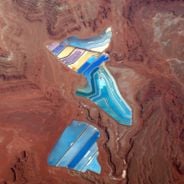
Satellite imagery has transformed how we view remote locations on Earth, offering perspectives on places that are often invisible or difficult to reach from ground level. This collection presents natural formations, artificial structures and historical sites from an aerial vantage point. From geological features like the circular Richat Structure in Mauritania's desert to ancient geoglyphs and modern engineering achievements, these images provide a distinct view of our planet's diversity. Locations documented include the geometric Nazca Lines in Peru, the pyramid structure of El Castillo in Mexico's Yucatán Peninsula and the Badlands Guardian in Alberta, a natural rock formation that resembles a head wearing headphones when seen from above. The collection also features Palm Jumeirah in Dubai, an artificial archipelago shaped like a palm tree, the vivid blue potash evaporation ponds in Utah, the pink waters of Lake Hillier in Western Australia and the volcanic island of Surtsey off Iceland. Additional examples include the Atacama Giant in Chile, a prehistoric geoglyph, the heart shaped Galesnjak island off Croatia's coast and the ship graveyard of the former Aral Sea in Uzbekistan, which documents the ecological consequences of human intervention.
Earth presents numerous geological formations, natural phenomena, and architectural structures that stand out through their exceptional characteristics. This collection documents such sites across all continents: the Darvaza Gas Crater in Turkmenistan, burning for decades; the luminescent glowworms in New Zealand's Waitomo Caves; the terraced limestone pools of Pamukkale in Turkey; and the layered sediment patterns of The Wave in Arizona. Additional locations include the basalt columns at Bushmills in Northern Ireland, the deep blue expanse of Aokigahara Forest at the base of Mount Fuji, the Chocolate Hills in the Philippines with their conical mounds, and the acidic turquoise waters of Kawah Ijen crater lake in Indonesia. The collection also features human-made curiosities such as Quinta da Regaleira in Sintra with its spiral initiation well, the Winchester Mystery House in California with its unusual architecture, and Las Pozas in Mexico, a surrealist garden of concrete constructions in the jungle. Natural phenomena are equally represented: the Racetrack Playa in California with its moving rocks, the optical illusion of Magnetic Hill in New Brunswick, the Caño Cristales in Colombia whose riverbed appears in bright colors, and Lake Natron in Tanzania with its high alkaline content. Each location demonstrates specific geological processes, climatic conditions, or cultural developments that distinguish these places from typical travel destinations.
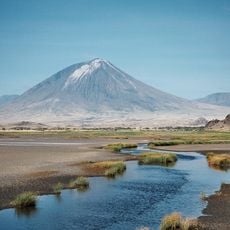
Tanzania provides photographers with an extraordinary range of subjects, from the Serengeti plains to Zanzibar's coastline and Mount Kilimanjaro, the highest peak in Africa at 19,341 feet (5,895 meters). The country contains major wildlife reserves including Tarangire, where elephant herds move between baobab trees, and the Ngorongoro Crater, which holds a dense concentration of large mammals within its 100-square-mile (260-square-kilometer) caldera. Coastal regions and offshore islands like Mafia and Pemba offer opportunities to photograph coral reefs, sea turtles, and traditional dhow boats. The Mahale Mountains support habituated chimpanzee groups, while Selous Game Reserve presents riverine landscapes and diverse animal populations. Stone Town's historic quarter features Arab, Persian, and Indian architecture spanning several centuries, including the House of Wonders and the narrow alleys of the former trading port. The less visited Katavi National Park delivers scenes of hundreds of hippos crowding shrinking pools during the dry season. Kondoa rock art sites preserve prehistoric paintings dating back as far as 30,000 years. The active volcano Ol Doinyo Lengai and alkaline Lake Natron with its flamingo flocks add geological interest. From the terraced hillsides of the Usambara Mountains to the wildflower meadows of Kitulo National Park, Tanzania covers nearly every photographic interest.
Ngorongoro Conservation Area
106.8 km
Mount Meru
124.7 km
Laetoli
96.7 km
Amboseli National Park
141.4 km
Ol Doinyo Lengai
39.3 km
Lake Manyara National Park
122 km
Karen Blixen Museum
142.6 km
Ngorongoro Crater
97.2 km
Arusha National Park
131.1 km
Olorgesailie
105.7 km
Giraffe Centre
142.4 km
Bomas of Kenya
147.5 km
Mount Suswa
143.6 km
Animal Orphanage
148.3 km
Nairobi Safari Walk
148.1 km
Olduvai Gorge Museum
96.7 km
Arusha Declaration Monument
130.8 km
Sheikh Amri Abeid Memorial Stadium
130.6 km
Ngurdoto Crater
141.6 km
Ol Doinyo Orok
83.9 km
Mamba Village
146.7 km
Lake Manyara Biosphere Reserve
120.6 km
Olare Orok Conservancy
149.9 km
Olmoti Crater
77.5 km
Kitumbeine Volcano
56.6 km
Ol Kinyei Conservancy
133.4 km
New Safari Hotel
131.3 km
Arusha clock tower
131.4 kmVisited this place? Tap the stars to rate it and share your experience / photos with the community! Try now! You can cancel it anytime.
Discover hidden gems everywhere you go!
From secret cafés to breathtaking viewpoints, skip the crowded tourist spots and find places that match your style. Our app makes it easy with voice search, smart filtering, route optimization, and insider tips from travelers worldwide. Download now for the complete mobile experience.
A unique approach to discovering new places❞
— Le Figaro
All the places worth exploring❞
— France Info
A tailor-made excursion in just a few clicks❞
— 20 Minutes