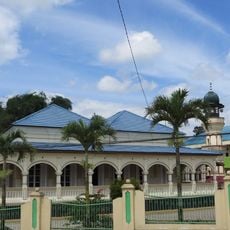
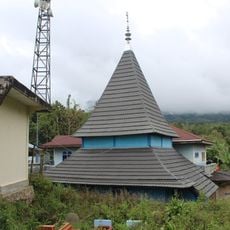
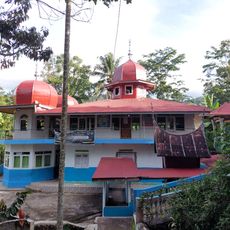
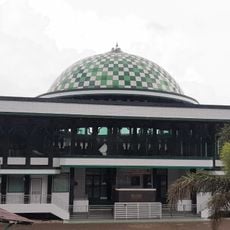
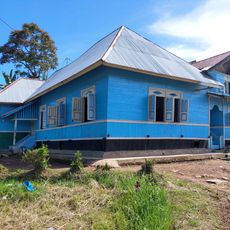
Bingkudu Mosque, 19th century mosque in Canduang Koto Laweh, Indonesia.
Bingkudu Mosque is a wooden mosque at the foot of Mount Marapi, built on a 60 x 60 m plot with a 21 x 21 m floor plan and a height of about 19 m. Its three-tiered ijuk roof sits over a main room with 53 twelve- and sixteen-sided columns, including a central sixteen-sided tonggak macu 75 cm in diameter. A 1.5 m kandang raises the floor, and an L-shaped wooden minbar dated 1316 H (1906) stands in front of the mihrab.
Founded by the Padri in 1823 during the Padri War, the mosque was first built entirely of wood. Its ijuk roof was replaced with zinc in 1957, and after being designated a cultural heritage site in 1989, a full restoration began in 1991 that returned the roof to ijuk and renewed decayed parts.
The building showcases local Minangkabau architecture with detailed wooden carvings and construction techniques that reflect traditional Rumah Gadang houses. These craftsmanship traditions remain visible in the structure and show how religious and domestic building styles connect in this region.
Access is best on foot as the mosque sits in a mountain village surrounded by walking paths. Visitors should remember this is an active place of prayer and respectful behavior along with appropriate clothing are expected.
The mosque keeps a bedug drum 3.1 metres long and 60 cm in diameter, made from a coconut trunk with a cowhide head; in Minang it is called tabuah. It was struck to mark prayer times before loudspeakers, and it is still kept. The minbar carries the date 1316 AH (about 1906) on its crown.
The community of curious travelers
AroundUs brings together thousands of curated places, local tips, and hidden gems, enriched daily by 93,244 contributors worldwide.