Badut, Hindu temple in Malang, Indonesia
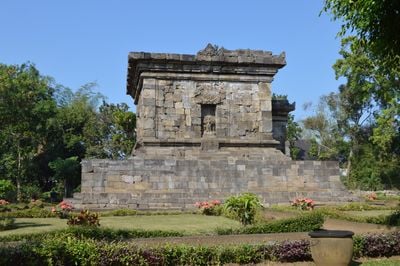
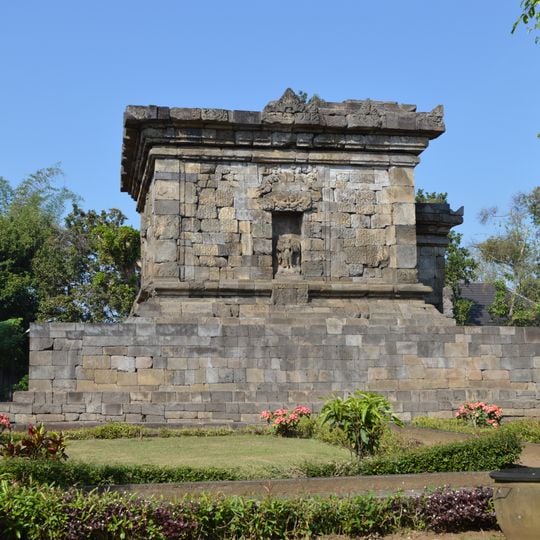
Candi Badut is an andesite Hindu temple whose square body rises from a plain two-metre pedestal. Its west-facing entrance has a projecting portal with a kala-makara head above it, and a carved figure stands in a front niche. Only the base and body survive; the tiered roof is missing, and three small perwara shrines once stood in front.
The temple was built around 760 CE during the Kanjuruhan Kingdom period and stands as the earliest known temple construction in East Java. It demonstrates how Hindu architecture became established in the region during that era.
The name Badut is popularly linked to the Indonesian and Javanese word for "clown", but scholars trace it to the Sanskrit Bha-dyut, the star Canopus or Agastya. The connection may lie in King Gajayana's childhood name Liswa, recorded in the Dinoyo inscription, which also means clown or comedian. Only the Durga Mahisasuramardini statue survives in its niche; the Mahakala, Nandishwara, Ganesha and Agastya images are missing.
The site is located near Ma Chung University and is reachable by public transportation. Wearing comfortable shoes is advisable since the grounds have uneven surfaces and require walking over varied terrain.
The name Badut may come from the Sanskrit Bha-dyut, meaning the light of Canopus or Agastya, not from the Indonesian word for clown. Another reading links it to King Gajayana's childhood name Liswa, which meant comedian or dancer. The temple's plain two-metre pedestal, without any carving, is also unusual.
The community of curious travelers
AroundUs brings together thousands of curated places, local tips, and hidden gems, enriched daily by 93,470 contributors worldwide.