St Patrick's Isle, Tidal island with medieval fortress in Peel, Isle of Man.
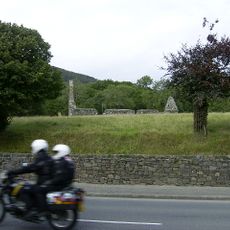
St Patrick's Isle is a tidal island of about five hectares, 326 metres long and 205 metres wide, joined to Peel by a causeway over Fenella Beach. Almost the whole islet is taken up by Peel Castle, built by Vikings to control the west coast's only sheltered harbour. Inside its walls stand an Irish-style round tower, a church of the 10th or 11th century and the ruined Gothic Cathedral of St German, built in the 12th century.
Scandinavian rulers built an early wooden fort on this island in the 11th century, which was later replaced by a stone structure as control of the island changed hands. The red sandstone walls seen today largely date from a major expansion carried out in the 14th century.
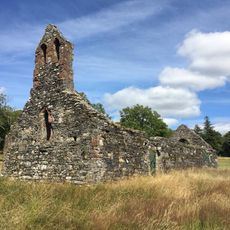
The red sandstone ruins of a cathedral and the remains of a monastery show that this place once served as a major religious center for the island. Walking through the site, visitors can see how spiritual life and military defense were built side by side within the same walls.
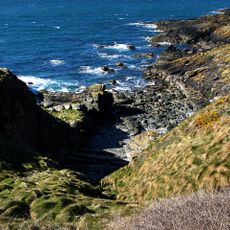
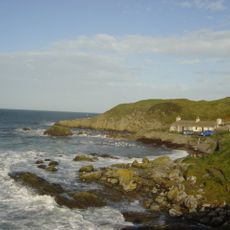
A causeway over Fenella Beach links the island to Peel, so it can be crossed on foot regardless of the tide. A public walk runs around the outside of the castle walls along the coastal edge of the islet. The surface is uneven in places, and the island is partly a sealife sanctuary.
The Viking-era grave known as the Pagan Lady of Peel was found on the island in a stone cist, the body fully clothed and accompanied by a necklace of more than 60 glass and amber beads, an iron spit, a goose wing, a comb, scissors and a bag of needles. It is the only Norse woman's grave recorded on the Isle of Man.
The community of curious travelers
AroundUs brings together thousands of curated places, local tips, and hidden gems, enriched daily by 93,465 contributors worldwide.