Bear Cave, Natural monument cave in Winden am See, Austria
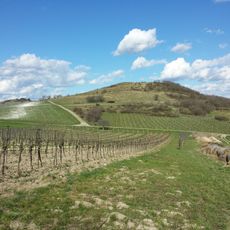
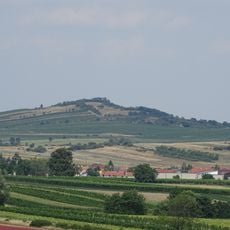
Bear Cave, also called Ludlloch, is a layer-joint cave on the western slope of the Zeilerberg, about three kilometres north of Winden am See. It has two southwest-facing entrances, each three metres wide and 1.6 metres high, showing traces of old walling. Inside is a single 45-metre-long room with short side passages; the entrances have been fitted with grille doors since 1978.
The cave is a fissure cave probably formed in the Pannonian as a surf cave of the Miocene Paratethys sea in limestone, about 20 m above the road on the western slope of the Zeilerberg. Excavations led by palaeontologist Kurt Ehrenberg from 1929 to 1931 yielded bones of cave bears, brown bears, cave hyenas and wolves. It has been protected since 1929.
The cave is also called Ludlloch, and its name recalls the cave-bear bones unearthed here between 1929 and 1931 under palaeontologist Kurt Ehrenberg, alongside brown bear, cave hyena and wolf remains. A complete cave-bear skeleton from the site is displayed in the Turmmuseum in Breitenbrunn, a short distance away.
The cave is a protected natural monument and entry is prohibited; the entrances have been fitted with grille doors since 1978. It lies about three kilometres north of Winden am See on the western slope of the Zeilerberg, roughly twenty metres above the road. The neighbouring Cepaeahöhle, twenty metres to the south, is not closed.
The cave is closed to visitors: it has been a protected natural monument since 1929, with entry prohibited. Its two southwest-facing entrances, each 3 m wide and 1.6 m high, were fitted with grille doors in 1978. The Great Mouse-eared Bat (Myotis myotis), Central Europe's largest bat species, is found inside.
The community of curious travelers
AroundUs brings together thousands of curated places, local tips, and hidden gems, enriched daily by 92,983 contributors worldwide.