Persenbeug Castle, Medieval castle in Persenbeug-Gottsdorf, Austria
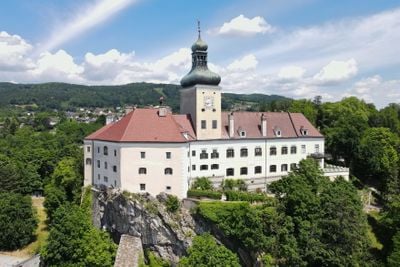
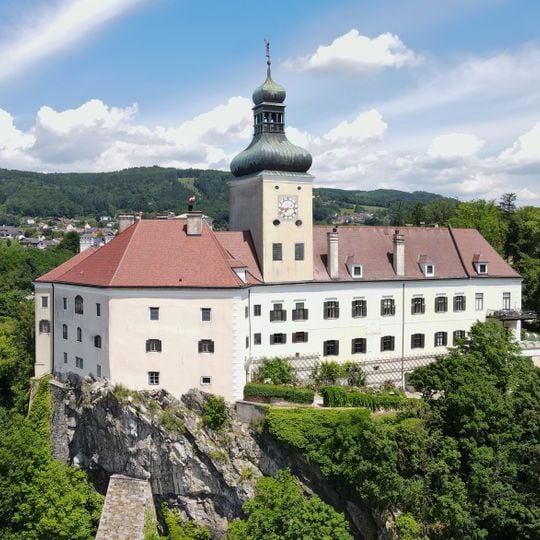
Persenbeug Castle is a stone fortress positioned on elevated ground overlooking the Danube valley in Lower Austria. The structure reveals layers of architecture from different periods, with rooms and sections reflecting how the building evolved over centuries.
Persenbeug Castle is first documented in 907, when the Bavarian count Sieghart of Sempt and Ebersberg took possession of "Bösenberg" and fortified it. In 1045 a floor of the knights' hall collapsed during a inheritance settlement attended by King Henry III; Bishop Bruno of Würzburg and Abbot Altmann of Ebersberg died. The Habsburgs held the castle until 1593, when it was sold to the Hoyos family, who gave it its present form. Emperor Franz I bought it in 1800; in 1916 Franz Joseph I passed it to his daughter Marie Valerie, and it remains with her descendants.
The castle remains connected to Austrian heritage through its continued private ownership by Habsburg descendants. This ongoing family presence gives the place a living link to the country's royal past rather than making it merely a historical artifact.
The castle opens for guided visits and hosts events including weddings, meetings, and concerts throughout the year. Its hilltop position means visitors should be prepared for walking on sloped ground when exploring the property.
Emperor Charles I, Austria's last emperor, was born within these walls, tying the castle to the final years of Habsburg rule. This imperial birth anchors the place in one of Europe's last great monarchies.
The community of curious travelers
AroundUs brings together thousands of curated places, local tips, and hidden gems, enriched daily by 94,050 contributors worldwide.