Dürnstein castle ruins, Medieval castle ruins in Dürnstein, Austria.
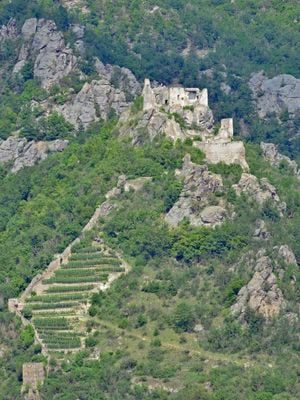
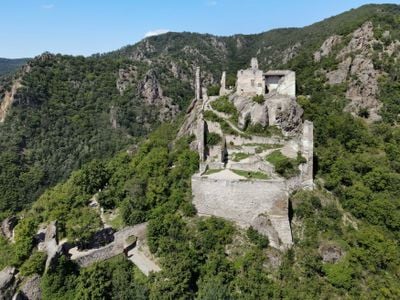
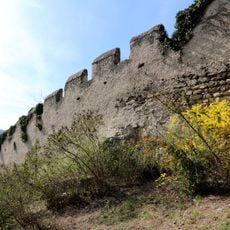
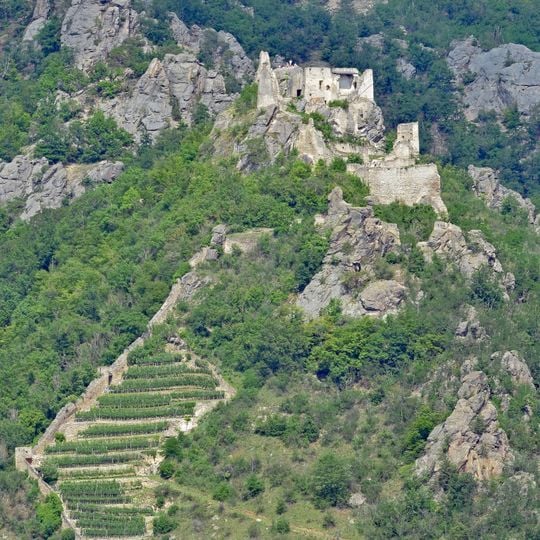
Dürnstein castle ruins stand on a rocky crag at 312 metres above sea level, above the Danube and the town of Dürnstein. Pale grey and tan walls of rough blocks and rubble survive: a broken tower with rectangular window openings at the peak, a lower curtain wall along the ridge with a small square tower fragment, and a massive flat-faced retaining wall below terraced walls. A stone staircase climbs diagonally between the ruins, and a defensive wall once linked the castle to the town.
Hadmar I of Kuenring, a ministerialis of Margrave Leopold III, had the rock castle built in the early 12th century on estates his ancestor Azzo of Gobatsburg had bought from Tegernsee Abbey. Hussite troops plundered town and castle in 1428 and 1432. In 1645 a Swedish contingent under Lennart Torstensson took Dürnstein and destroyed parts of the gate system on withdrawing. The Starhembergs bought the castle in 1663; from 1679 it was uninhabitable and abandoned.
The ruins are part of the UNESCO World Heritage Site Wachau Cultural Landscape and shape how visitors understand this Danube valley. They represent the connection between medieval history and the region's modern wine tradition.
Access is via two hiking trails from Dürnstein through rocky terrain and well-marked routes. Most visitors find a moderate ascent, with plenty of space at the top to enjoy views and explore the remains.
Few people realize that Richard's imprisonment here represents one of the rare cases of an English monarch being held outside his kingdom. This unusual situation turned the location into a turning point in medieval European politics.
The community of curious travelers
AroundUs brings together thousands of curated places, local tips, and hidden gems, enriched daily by 94,021 contributors worldwide.