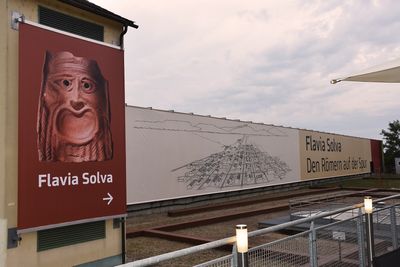
Flavia Solva, Roman archaeological site in Wagna, Austria.
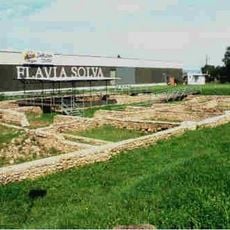
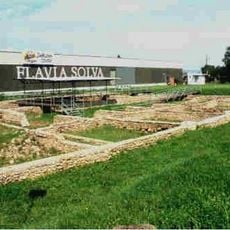
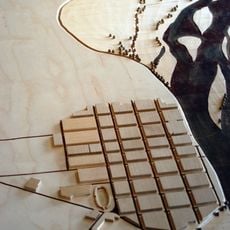
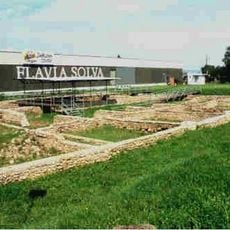
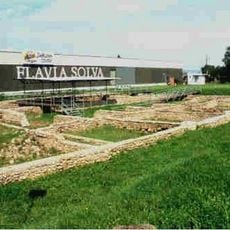
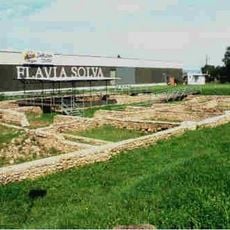
Flavia Solva lies on open fields near Wagna, on the west bank of the Mur. Excavations have uncovered about 40 rectangular insulae of roughly 60 by 70 metres, separated by gravel streets about 6 metres wide, with stone buildings in the centre and timber-and-clay houses at the edges. Only a few foundations are visible today, including a hypocaust floor protected by a glass roof; a pavilion on stilts housing a confectionery stands over part of the site.
A Celto-Roman settlement of wooden buildings arose on the Mur's west bank around 15 CE, while Noricum was still a protectorate. Around 70 CE Vespasian raised it to a municipium named for his Flavian family, and the old settlement was levelled and rebuilt on a grid plan. The city was destroyed in 166 during the Marcomanni incursions, rebuilt under Commodus, and abandoned in the early 5th century.
The archaeological museum holds over one thousand objects from Roman times, including household goods, religious items, and building materials discovered during excavations. These artifacts give a sense of how daily life unfolded for the people who lived here.
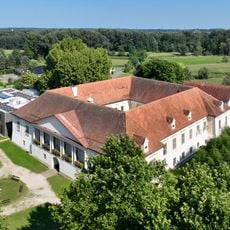
Only a few foundations are visible at the edge of Wagna, partly under a pavilion on stilts that houses a confectionery and ice-cream parlour. The remains of a Roman house's underfloor heating are covered by a glass roof, and metal shafts in the ground mark the lines of walls and blocks. Many Roman gravestones are set in the courtyard of Schloss Seggau near Leibnitz.
The site preserves the remains of a roughly 80-meter wooden amphitheater, the sole known example of its kind in the Roman province of Noricum. This rare survival offers visitors insight into less commonly preserved Roman construction techniques.
The community of curious travelers
AroundUs brings together thousands of curated places, local tips, and hidden gems, enriched daily by 94,474 contributors worldwide.