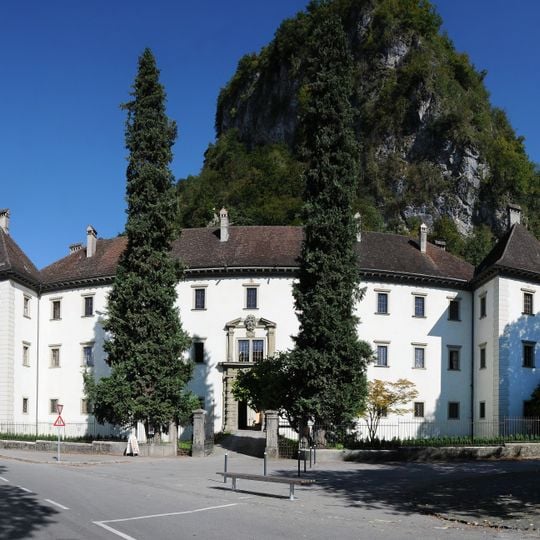
Palast Hohenems, Renaissance palace in Hohenems, Austria.
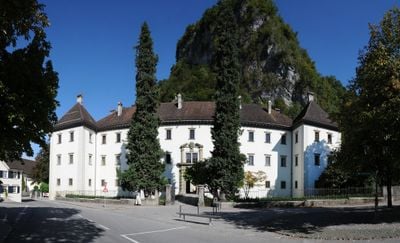
Palast Hohenems is a Renaissance building in the town of Hohenems featuring symmetrical wings, spacious halls, and ornate stone carvings on its facades. The structure consists of multiple levels with interconnected interior spaces and an outer courtyard arrangement.
Cardinal Mark Sittich III von Hohenems commissioned Italian architect Martino Longhi the Elder to build the palace; the shell was erected between 1562 and about 1567, with a ceiling dated 1565. Count Kaspar von Hohenems extended it in 1603–1610. In 1840 it was converted into a barracks, and from 1882 Count Clemens Waldburg-Zeil renovated it as a family residence. A 1947 fire damaged the building and the Lanckoroński art collection stored there, destroying an estimated 120 works.
The palace is named after the counts who built it, and its two Nibelungenlied manuscripts, written around 1220, were found here; the physician Jacob Hermann Obereit rediscovered manuscript C. Today a restaurant and event rooms run by Palast Gastronomie GmbH occupy part of the building, which the Waldburg-Zeil family still lives in.
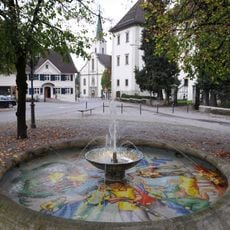
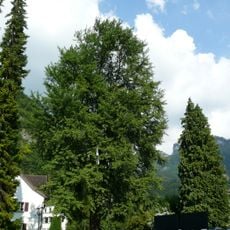
The palace is privately owned and lived in by the Waldburg-Zeil family, so the interior is not open as a museum. A restaurant and event rooms operate inside the building. Visitors see the L-shaped white facade, the courtyard and the tall cypress from the street side.
Two manuscripts of the Nibelungenlied, known as A and C, were found at the palace. The C manuscript was rediscovered by the Lindau physician Jacob Hermann Obereit, alerted by the Zurich scholar Johann Jakob Bodmer to search castles and monasteries around Lake Constance. An Alemannic scribe wrote the text around 1220 from an earlier Bavarian model.
The community of curious travelers
AroundUs brings together thousands of curated places, local tips, and hidden gems, enriched daily by 93,452 contributors worldwide.