Aguntum, Archaeological site and museum in Dölsach, Austria
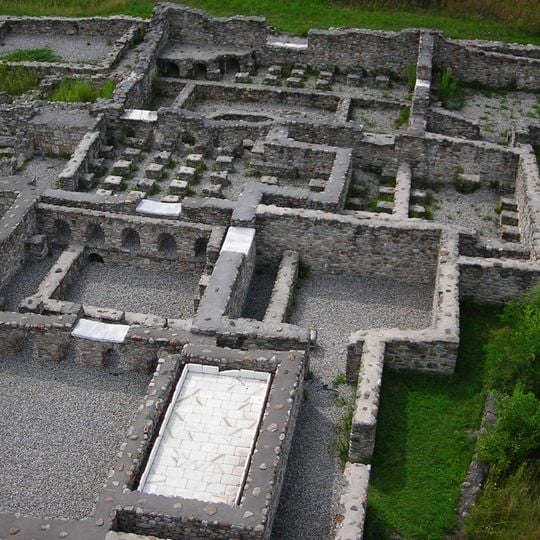
Aguntum is a Roman settlement with extensive remains of buildings, baths, walls, and gates spread across a large excavation area in the Lienz Valley. The site works together with an adjacent museum that displays the objects and structural evidence uncovered through ongoing archaeological work.
The Laianci tribe lived in the Drau valley before Rome took the Alps in 15 BC. Claudius raised Aguntum to Municipium Claudium Aguntum, one of five municipia in Noricum, and the town built its walls, atrium house and baths in the 1st century AD. Ash layers with human remains record sacks by Radagaisus and Alaric and, in 452, by Attila's Huns; after the battle of 610 the town was destroyed and the bishopric moved to Lavant.
The name Aguntum survives in a legend recorded in 1599 by the lawyer Veit Netlich, who saw gravestones with "unknown writing" and noted that people said a heathen city had stood here. Only the low vaults of the hypocaust floors remained visible, which gave rise to the tale of a city of dwarfs. The site museum displays painted tombstones, pottery masks, bronze objects and coins from the excavations.
Visitors can walk the grounds year-round on marked paths that guide you through the ruins with interpretive signs along the way. Combining time in the outdoor excavation area with a visit to the indoor museum gives you the best understanding of the site.
The circular building beside the forum, uncovered in 2006, was first taken for a meeting hall or shrine; it is now identified as a macellum, a small food market. Such round market halls are common in Italy and the southern provinces but rare north of the Alps. Oysters sold there were packed in straw and cooled with ice for transport as far as Cologne and Mainz.
The community of curious travelers
AroundUs brings together thousands of curated places, local tips, and hidden gems, enriched daily by 93,911 contributors worldwide.