Schloss Stainz, Gothic and Baroque castle in Stainz, Austria
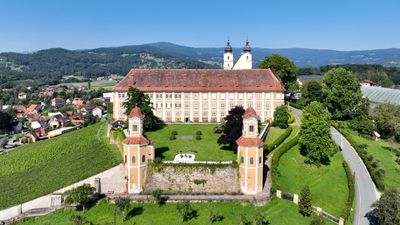
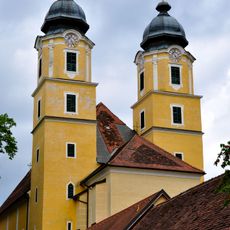
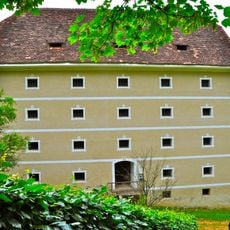
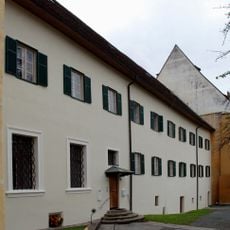
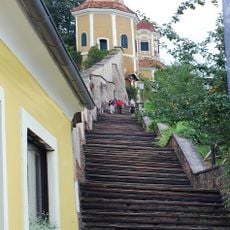
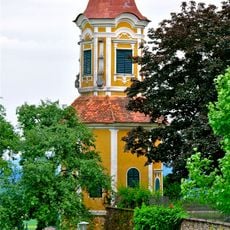
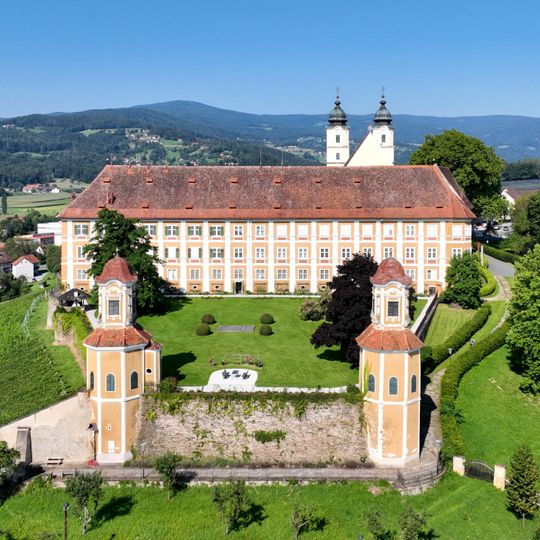
Schloss Stainz is a former Augustinian Canons' monastery on a hill above Stainz, converted into a Baroque castle. The church, enlarged 1605–1629 under provost Jakob Rosolenz, keeps medieval remains in its towers and west wing, a two-storey high altar consecrated in 1695, and stucco and fresco decoration from after 1680. The main portal was moved to the east side facing the inner courtyard, leaving a plain windowless apse between the towers.
Leutold I von Wildon allowed Augustinian canons from Seckau to settle a small church and monastery on the castle mountain in 1229. Provost Jakob Rosolenz reorganised the community and enlarged the neglected church between 1605 and 1629. Emperor Joseph II dissolved the monastery in 1785; in 1840 Archduke Johann bought the complex for 40,000 guilders as a hunting lodge, and it passed to his descendants, the Counts of Meran.
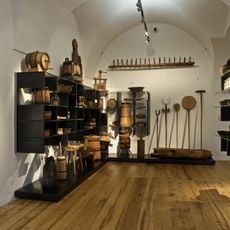
The castle's two Joanneum collections opened in 2006 and 2009. The Styrian Hunting Museum combines historic weapons and specimens with modern technology to examine hunting as a social and ethical practice; the Museum of Agriculture and Forestry shows Styrian rural implements and household goods from the Stone Age onward.
The castle courtyard, cellar, arcades and terrace can be rented for private events, while the museums occupy other parts of the building. The two Joanneum collections are indoors, so allow time for both the hunting and the agriculture displays. The complex sits in Stainz, with the former monastery church adjoining it.
Four well-preserved historical frescoes by artist Mathias Echter decorate the former monks' dining hall. A hidden feature is an internal spiral staircase connecting this room directly to a historic wine cellar below.
The community of curious travelers
AroundUs brings together thousands of curated places, local tips, and hidden gems, enriched daily by 92,826 contributors worldwide.