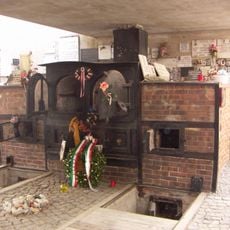
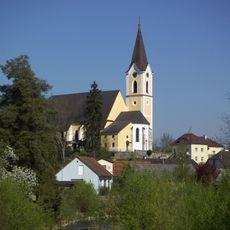
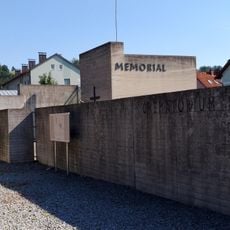
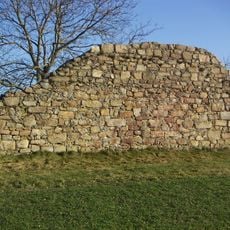
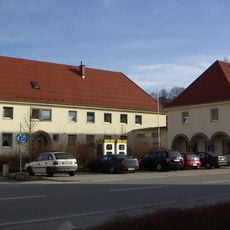
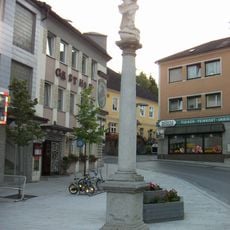
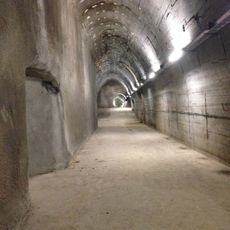
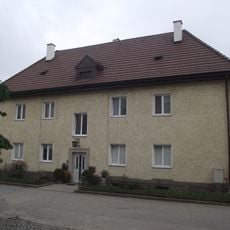
Berglitzl, Archaeological site in Langenstein, Austria.
Berglitzl is an archaeological site near Langenstein positioned where the Gusen River once met the Danube. The location features steep granite rock faces and contains excavated areas that reveal evidence of human activity and daily practices from different periods.
The area saw human use dating back to the Stone Age, with evidence of activity stretching across thousands of years. Different cultures left their marks at this location, showing how people returned to this site repeatedly over a very long timespan.
The name Berglitzl refers to a site used as a sanctuary for roughly five thousand years, from the Mesolithic to the 10th century AD. The Lengyel culture laid out fire and deposit pits in a curved line along the former Danube bank, reinforced with massive stone settings. In the Early Bronze Age, sacrificial shafts were dug in the same direction at the same spot, and similar pits were still being dug there into the 10th century, linked to the 8th- and 9th-century burial ground.
The Berglitzl rises about 13 metres above the flat floodplain south of Gusen, with a steep granite wall on the west side and gentler loess slopes to the east and south-east. It lies on the north bank of the Danube, roughly 3 km by air from the site of the Roman legionary camp Lauriacum on the opposite bank. The plateau measures about 150 m north to south and 90 m west to east.
The site lies exactly on the line between the parish churches of St. Georgen an der Gusen and Enns, and probably served as a landmark at a landing point on the northern Danube bank since prehistoric times. The Roman legionary camp Lauriacum stood about 3 km away on the opposite bank.
The community of curious travelers
AroundUs brings together thousands of curated places, local tips, and hidden gems, enriched daily by 93,977 contributors worldwide.