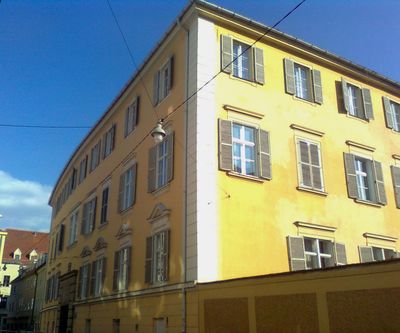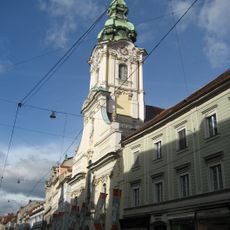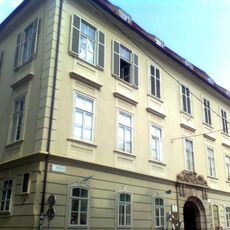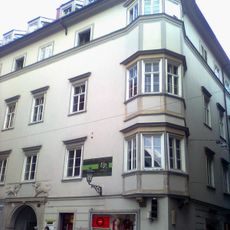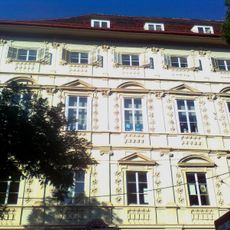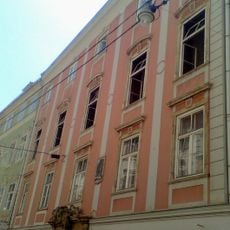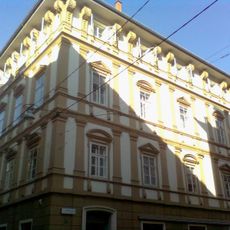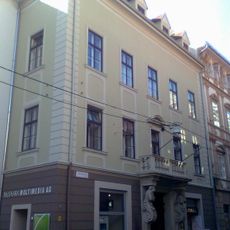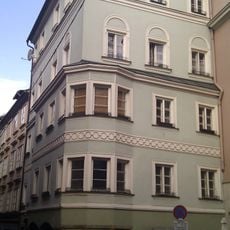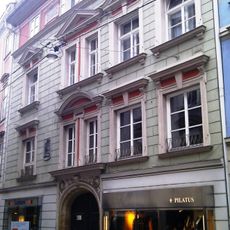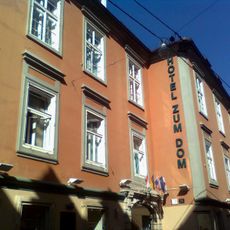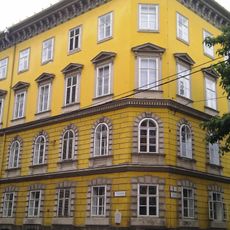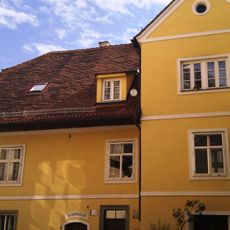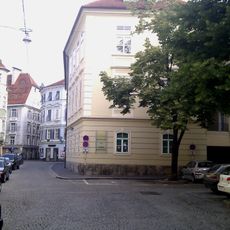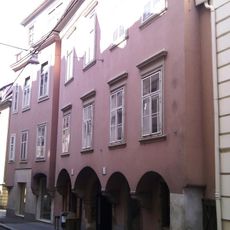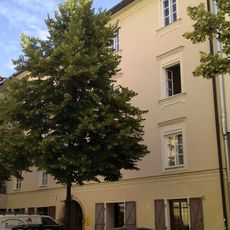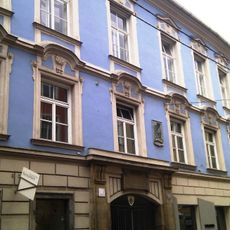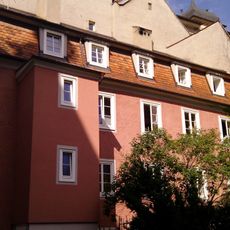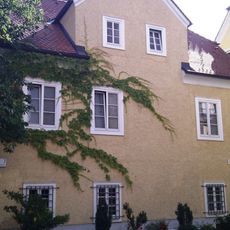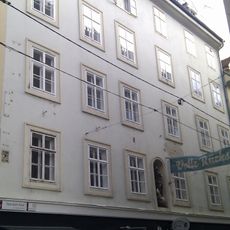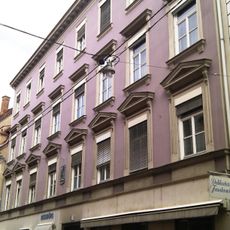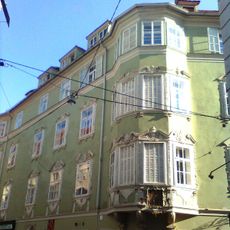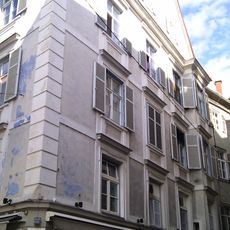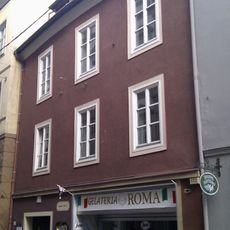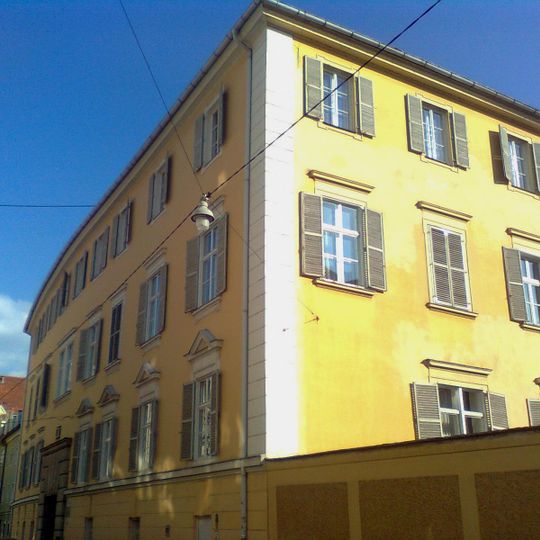
Bischöfliches Palais, Graz, Episcopal palace in Innere Stadt district, Graz, Austria
The Bischöfliche Residenz in the Innere Stadt district is a palace with multiple wings, combining vaulted cellars, ground floors, and structural elements spanning different building periods. The rooms display elaborate interior details and varying architectural styles that developed over centuries.
The building's origins trace back to a house donation by nobleman Ottokar von Graz to Bishop Ulrich von Seckau in 1254. Over the following centuries, the residence was expanded and modified, until it suffered damage from bombing in World War II and required reconstruction between 1947 and 1950.
The building functions as the seat of the bishop and diocesan administration of Graz-Seckau, housing rooms decorated with intricate ceiling frescoes and a chapel. These features reflect the religious importance this residence holds for the local Catholic community.
The building sits centrally at Bischofplatz 4 in downtown Graz and is easily accessible by foot. Keep in mind that this is an active administrative building and access may be limited to certain areas or times.
Hidden within the palace are medieval wall paintings from the 13th century depicting Romanesque scenes from the Old and New Testament. These artworks were discovered only after bomb vibrations from World War II revealed them and remain visible today.
The community of curious travelers
AroundUs brings together thousands of curated places, local tips, and hidden gems, enriched daily by 60,000 contributors worldwide.