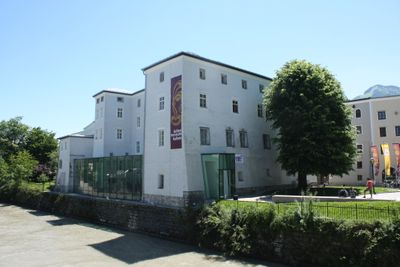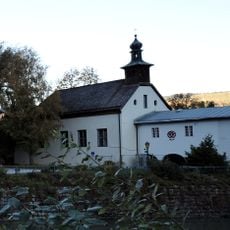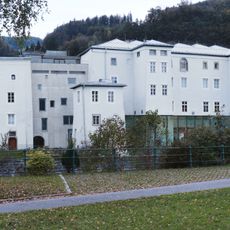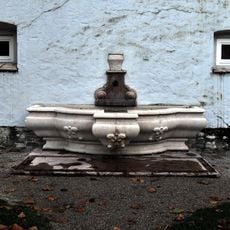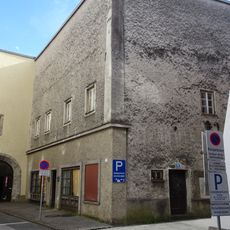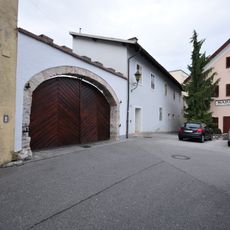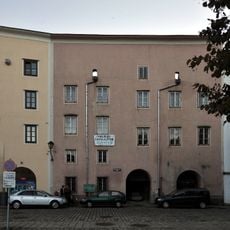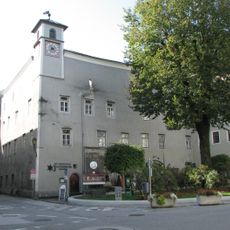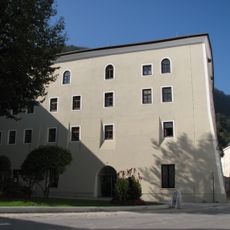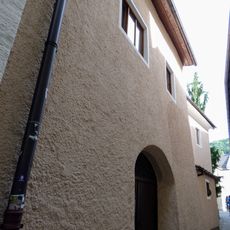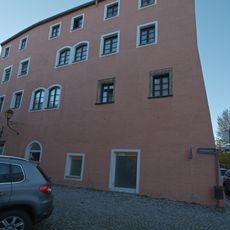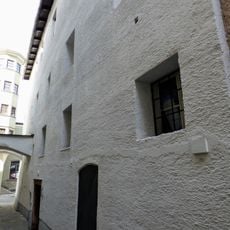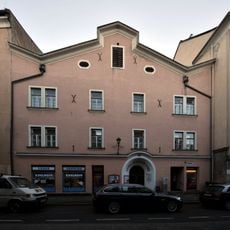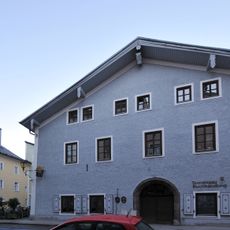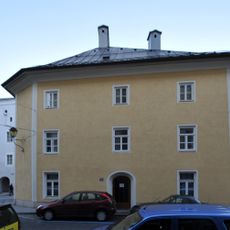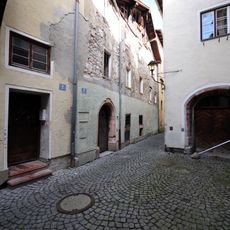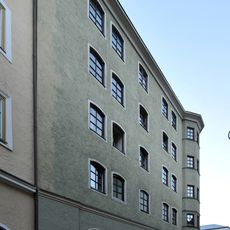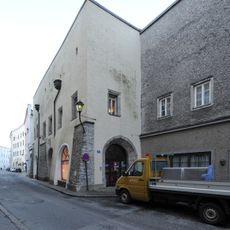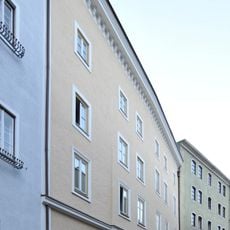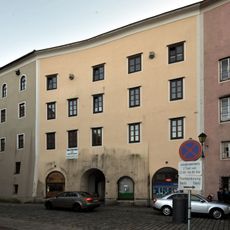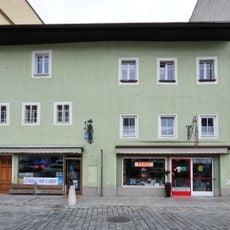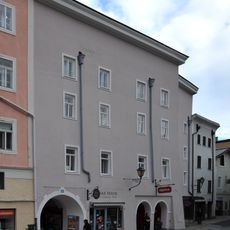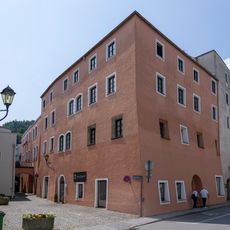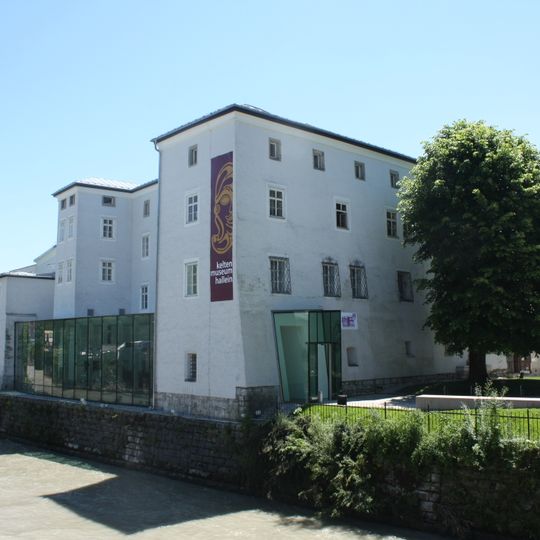
Keltenmuseum Hallein, Celtic museum in Hallein, Austria.
The Keltenmuseum Hallein is a museum in Hallein that displays archaeological findings from Celtic settlements, including objects from burial sites and salt mining locations at nearby Dürrnberg. The collection contains pottery, weapons, jewelry, and other artifacts dating back thousands of years.
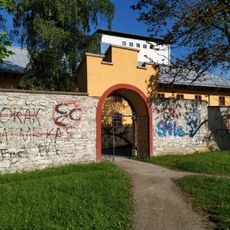
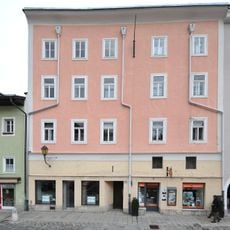
The museum began in 1882 as the Hallein town museum, housed first in the Bürgerspital, then from 1930 in the Rathaus and from 1952 in a gateway of the town fortifications. In 1970 it was renamed Keltenmuseum and moved into the former salt administration building on Pflegerplatz, erected in 1654 under Prince-Archbishop Guidobald von Thun and Hohenstein. Since 2012 it has been part of the Salzburg Museum.
The museum's name comes from the Celtic finds at Dürrnberg, and its logo is a stylised Celtic head from a bronze mount on a wooden jug buried with a warrior in Grave 44 at Moserstein. The collection also includes the Dürrnberg Schnabelkanne, a 5th-century BC bronze flagon with Scythian-influenced decoration. Since 2012 the museum has been part of Salzburg Museum.
The museum is open daily during set hours and offers guided tours and educational programs for different age groups. Plan your visit to allow time for viewing the exhibits and potentially joining a guided tour if you want more detailed information.
The museum displays paintings in dedicated rooms that depict salt production processes from the 1700s under the rule of prince-archbishops. These artworks show how the salt industry flourished under church leadership and shaped the region's development.
The community of curious travelers
AroundUs brings together thousands of curated places, local tips, and hidden gems, enriched daily by 94,078 contributors worldwide.