Upper Austrian State Library, State library in Linz, Austria
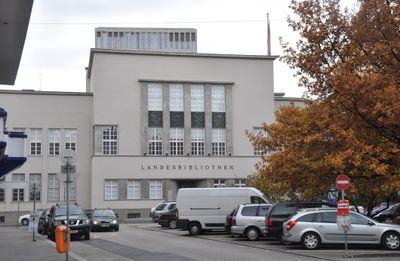
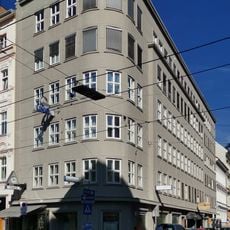
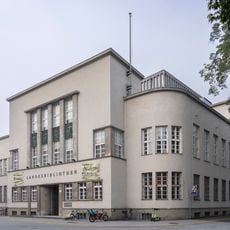
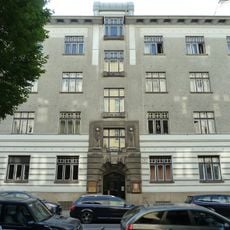
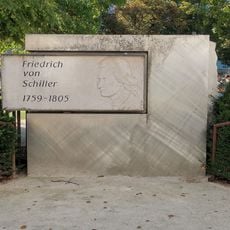
The Upper Austrian State Library occupies a building at Schillerplatz erected in 1930–31 to plans by Julius Smolik in the Neue Sachlichkeit style, with a stone-clad facade. It holds medieval manuscripts, incunabula and prints from dissolved Upper Austrian monasteries, plus current non-fiction, fiction and electronic media.
The library's origins lie in the k.k. Lyzealbibliothek (bibliotheca publica), founded by imperial decree in 1774 after the Jesuit order's suppression, to hold books from more than 20 dissolved Upper Austrian monasteries. From 1784 it was housed for 150 years in the Baumgartenberg house at Landstraße 30. Konrad Schiffmann, its head from 1908, pushed through a dedicated building; the Neue Sachlichkeit structure at Schillerplatz, planned by Julius Smolik, opened on 9 November 1934.
The library's name recalls its origin as the k.k. Lyzealbibliothek, or bibliotheca publica, founded by imperial decree in 1774 as the first public library of Upper Austria. Its historical book collection comes from predecessor institutions and from more than 20 monasteries dissolved between 1782 and 1792 under Joseph II.
The library sits at Schillerplatz in Linz, in the building opened on 9 November 1934 and extended in 2010. The reading room and the collection of around 80,000 volumes arranged by Numerus Currens in the magazines are reached through the main entrance; the online catalogue can be searched before a visit.
The facility includes an underground storage system for the collection and a tower structure topped with a lantern that houses administrative offices. This design allows the library to organize its vast materials efficiently while creating workspaces that benefit from natural light.
The community of curious travelers
AroundUs brings together thousands of curated places, local tips, and hidden gems, enriched daily by 92,853 contributors worldwide.