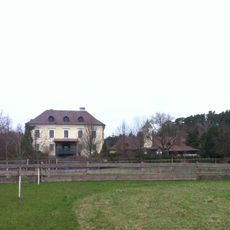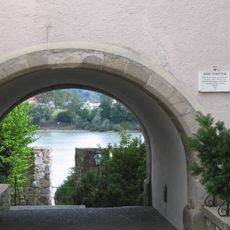
Säusenstein Abbey, Gothic monastery in Ybbs an der Donau, Austria.
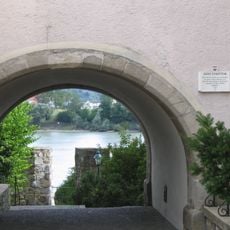
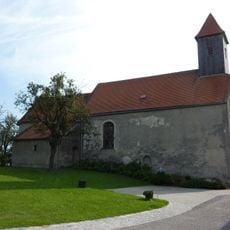
Säusenstein Abbey is a former Cistercian monastery on the right bank of the Danube in Säusenstein, Lower Austria. The complex is entered through a gateway and grouped around a courtyard; the Gothic church was consecrated in 1341, and the smaller original foundation church was converted into the chapter house, where Gothic frescoes survive in the cloister. The buildings were largely rebuilt after a fire from 1703 onward, giving the present facade.
Eberhard V. of Wallsee granted the site and its endowment to Wilhering Abbey on 19 September 1336, after talks with the Augustinians in 1333 and a failed settlement from Zwettl. The first abbot, Ulrich, arrived with monks around 1337, and the bishop of Passau confirmed the foundation in 1344. Joseph II dissolved the abbey on 21 May 1789; Napoleon's troops later used the buildings as a military hospital.
The name Säusenstein comes from the Latin "Vallis Dei" (Valley of God), rendered in the local dialect as "Säusenstein". The abbey church, consecrated in 1341, replaced a smaller founding church that was converted into the chapter house; Gothic frescoes found in the cloister survive from that period. The founder Eberhard V. of Wallsee, who died on 21 April 1370, was buried in the abbey church.
The monastery sits within a loop of the river and is reachable via walking paths that cross the valley. Visits work best in clear weather, as the grounds are open and shelter is limited.
Napoleon's troops used the abbey as a military hospital during their occupation of Austria, and French excesses badly damaged the buildings; arson around 1801 almost totally destroyed the church, with further damage in 1805 and 1809. This episode preceded the 20th-century agricultural use.
The community of curious travelers
AroundUs brings together thousands of curated places, local tips, and hidden gems, enriched daily by 94,328 contributors worldwide.