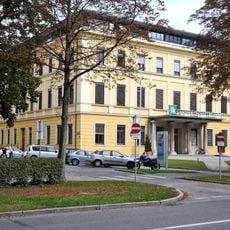
LMK, Regional museum in Klagenfurt, Austria
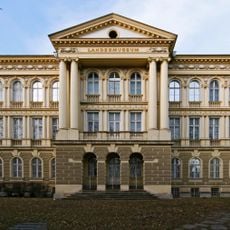
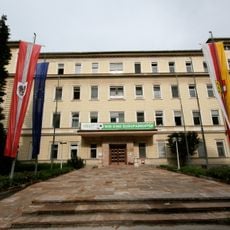
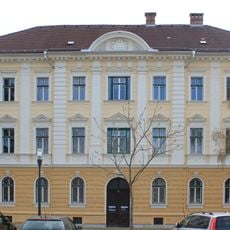
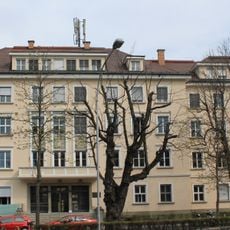
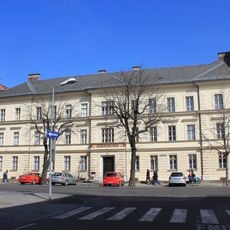
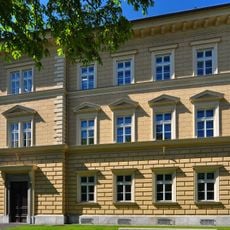
The kärnten.museum, formerly the Landesmuseum Kärnten, occupies a Neo-Renaissance building on Museumsgasse in Klagenfurt. Architect Gustav Gugitz designed it, and it opened in 1884. Its courtyard was covered with a glass roof during the 2020–2022 renovation. The collections include dugout canoes from the Längsee and Klopeiner See, paintings by Albin Egger-Lienz and Josef Ferdinand Fromiller, and a giraffe piano by Nikolaus Müller.
The institution was founded in 1844 and moved to its current Neo-Renaissance building in 1884, inaugurated by Crown Prince Rudolf at that time. This move marked a turning point for the growing collection, which finally had a proper home.
The museum's folk-culture holdings grew from the Kärntner Landsmannschaft collections added after 1922 and from the Kärntner Heimatmuseum founded in 1925. Its library held about 120,000 volumes in 2003, roughly 22,000 printed before 1900, with German, Latin and Slovene works. Paintings include pieces by Josef Ferdinand Fromiller and Albin Egger-Lienz.
The main building on Museumgasse reopened on 21 November 2022 after a general renovation begun in 2020, with a glass roof over the inner courtyard and a traffic-calmed Museumgasse. The new permanent display focuses on Carinthia's geological history, its nature and historic milestones. A separate collections and science centre opened in October 2019 in the south of Klagenfurt.
The International Mineralogical Association lists the museum, under the code LMK-Klagenfurt, as the type-material repository for two minerals: Kahlerite and Weinebeneite. Type material is the reference sample that defines a mineral species, so these specimens are the standard against which other finds are compared.
The community of curious travelers
AroundUs brings together thousands of curated places, local tips, and hidden gems, enriched daily by 92,833 contributors worldwide.