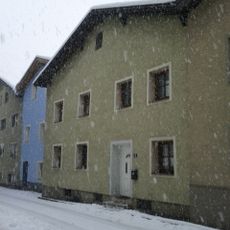
Franziskanerkloster Schwaz, Franciscan monastery in Schwaz, Austria.
Franziskanerkloster Schwaz is a monastery in Schwaz combining Gothic and Baroque architectural styles visible in the church, cloister, and chapels. The complex was expanded and modified across these stylistic periods, with both eras evident in how the buildings are organized and decorated.
The monastery was founded in 1507 with the permission of Emperor Maximilian I, at the urging of Schwaz mine owners, miners and citizens; Franciscans had already been coming to Schwaz to help out since 1471. Hans Fieger von Melans donated the land and his adjoining Fiegerhof with its spiral staircase tower. The foundation stone was laid on 30 August 1507, and the first wing was consecrated on 23 November 1507.
The name Fiegerhof recalls Hans Fieger von Melans zu Friedberg, who bought the plot from Andrä Stollbrock and donated it to the Franciscans in 1507, adding his own neighbouring house with its spiral staircase tower. In the cloister, the coats of arms of Hans Fieger and his brothers Siegmund and Christoph mark the first three frescoes they funded.
The monastery lies in the centre of Schwaz, and the church, cloister and Bonaventura chapel are the parts to look for. The cloister holds the coats of arms of the donors on its vault keystones, and the Bonaventura chapel keeps its original Butzenfenster windows. The refectory has changed little since the founding period, though its tables, wooden floor and panelling were last renewed in 1961.
The wall paintings in the cloister show a rare layered history, with early motifs from the 16th century connected to later Baroque overpaintings. This art-historical palimpsest allows visitors to see two artistic periods in the same location.
The community of curious travelers
AroundUs brings together thousands of curated places, local tips, and hidden gems, enriched daily by 94,380 contributors worldwide.