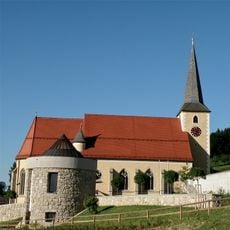
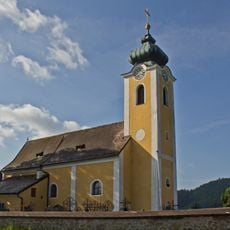
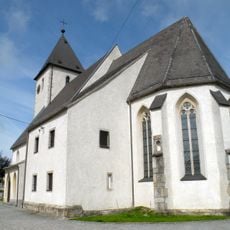
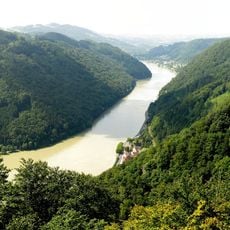
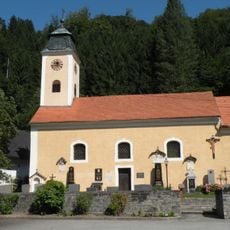
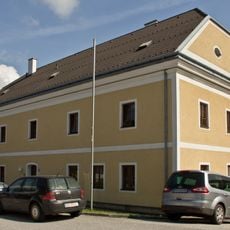
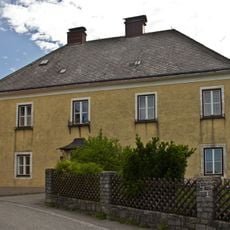
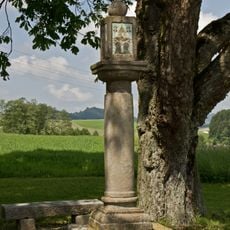
Stift Waldhausen, Baroque monastery in Waldhausen im Strudengau, Austria.
Stift Waldhausen is a Baroque monastery with a church featuring multiple side chapels and ornate interior decorations. The walls and ceilings display layers of frescoes and paintings that reflect different artistic periods.
The Augustinian community was established in 1147 by a local nobleman and his wife who sought to build a religious center. The monks later moved from their original site to this forested area, where the monastery developed over the following centuries.
The monastery was dissolved in 1792 by Emperor Leopold II, so no canons live here today. Its most famous member was Konrad von Waldhausen, preacher in Vienna from 1350 and confessor to Emperor Charles IV in Prague from 1363; his sermons influenced Jan Hus. The church's 1803 Rummel organ has 16 registers on two manuals and pedal.
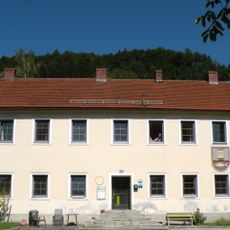
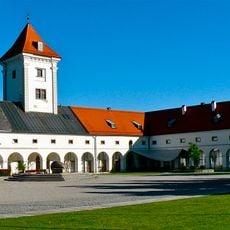
Only the northwest wing with its arcades and gate tower survives, so visitors should look for that section rather than a complete monastic complex. The buildings were restored ahead of the 2002 Upper Austrian provincial exhibition, when the arcades were glazed. Today they house the Strudengau Leader office, a supervised-holiday project and assisted-living flats, so the interiors are working spaces rather than a museum.
After the monastery was dissolved in 1792, parts of the buildings were demolished in 1800 and the stone used to build Franzensburg in Laxenburg. The large monastery fountain was moved to the Prälatenhof of Stift Melk. Only the northwest wing with its arcades and gate tower survived.
The community of curious travelers
AroundUs brings together thousands of curated places, local tips, and hidden gems, enriched daily by 94,049 contributors worldwide.