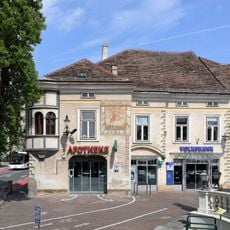
Thonetschlössl, District museum in Mödling, Austria.
Thonetschlössl is a museum in Mödling with three floors and Late-Baroque design, marked by symmetrical forms and detailed facade decorations. The rooms hold geological specimens, historical objects, weapons from Turkish Wars, and one of Austria's earliest collections of Avar period items.
Johann Baptist Verda von Verdenberg donated a Capuchin monastery here in 1631; it was destroyed in the Turkish War of 1683 and rebuilt in 1684. After secularisation under Joseph II in 1785, Giacomo Caliano bought it in 1786 for silk and cloth production. It later served as a chemical bleach works, a theatre from 1823 to 1836, and a silk factory under entomologist Ernst Heeger from 1833. Countess Elise von Salm had it rebuilt castle-style from 1845, and the Thonet family acquired it in 1889. The city bought it in 1931 and housed the district museum, founded in 1904, there.
The name comes from the Thonet family, influential figures in the region's development. Today the building displays collections that connect visitors with local stories and objects spanning different periods.
The museum operates on limited days and requires some planning for a visit. It helps to check opening hours in advance and arrive early to have enough time to explore all three floors.
The museum houses the rare library of Joseph Hyrtl, containing original works by medical authors like Paracelsus. These valuable texts have been digitalized and made accessible to the public.
The community of curious travelers
AroundUs brings together thousands of curated places, local tips, and hidden gems, enriched daily by 93,069 contributors worldwide.