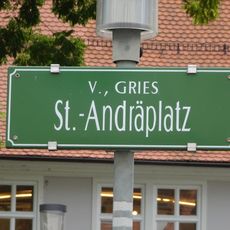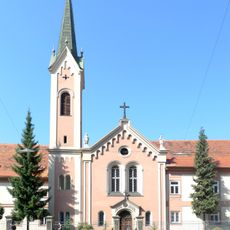
St. Andrä, Graz, Parish church in Gries district, Graz, Austria.
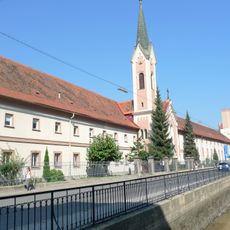
St. Andrä is a three-nave stepped hall church on St.-Andrä-Platz in Graz's Gries district, built from 1616 to 1627 to plans by Archangelo Carlone. Its neo-Renaissance facade dates from 1876 by August Ortwein. A cross chapel (1670) and an Andrew chapel (1717) flank the nave, and the high altar has stood in its present position since 1838.
A church existed here in the early Gothic period, first documented in 1270. The Dominicans moved to the Murvorstadt and had the present building erected from 1616 to 1627 to plans by Archangelo Carlone. The adjoining monastery passed to secular priests in 1783 under Josephinian reforms. The church was baroquified in the 18th century and received its neo-Renaissance facade from August Ortwein in 1876.
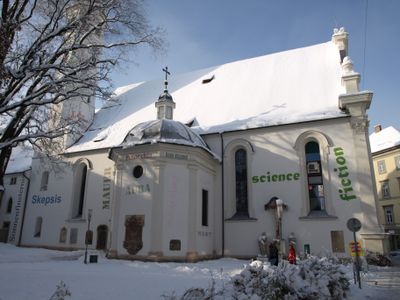
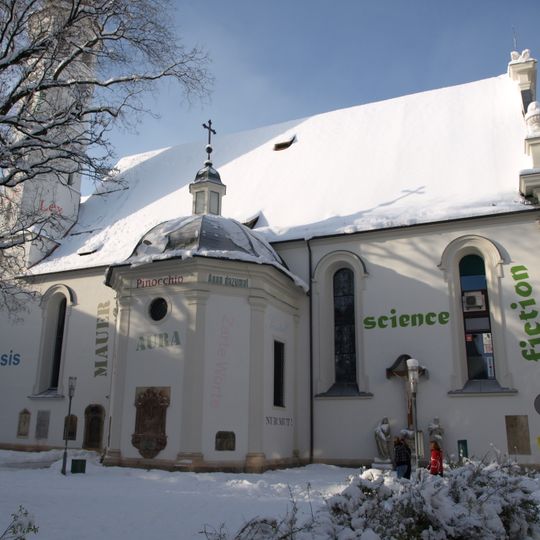
Since 1999, invited contemporary artists have intervened in the church interior under the label Andrä Kunst, treating it as a spiritual space rather than an exhibition hall. A window bulges outward under acrylic glazing and a grille, another glows inward through single-colour TV monitors. Since late 2010 Gustav Troger's exterior lettering, titled "Gegen wart", has made the church bright outside.
The church is easily accessible in Gries with regular bus connections to the southern part of Graz. Visitors should enter respectfully and quietly during prayer times when the building is open to the public.
Since 1999 the parish has invited contemporary artists to intervene in the church interior under the label Andrä Kunst, treating it as a spiritual space rather than an exhibition hall. One window bulges outward like a dome behind acrylic glazing and a grille, while another shines inward through single-colour TV monitors. Since late 2010 Gustav Troger's exterior lettering, titled "Gegen wart", has made the church bright outside too.
The community of curious travelers
AroundUs brings together thousands of curated places, local tips, and hidden gems, enriched daily by 92,892 contributors worldwide.