Blockheide, Nature reserve and museum in Gmünd, Austria
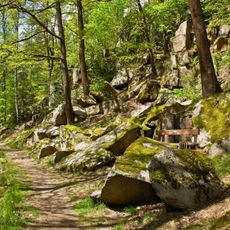
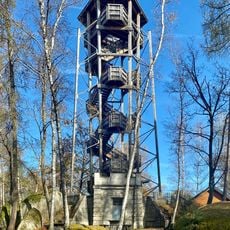
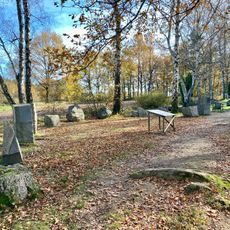
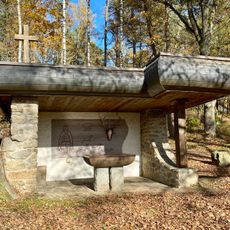
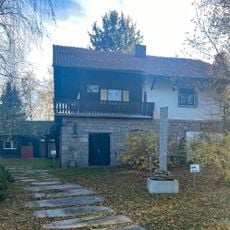
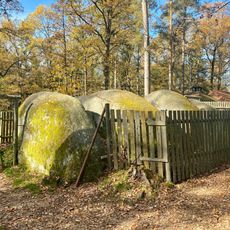
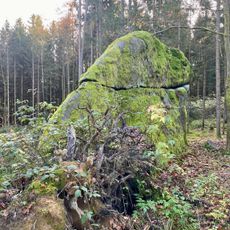
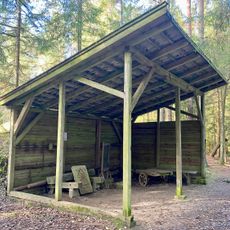
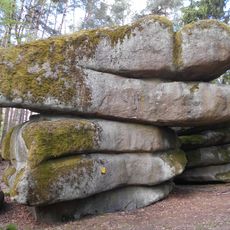
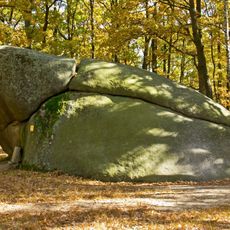
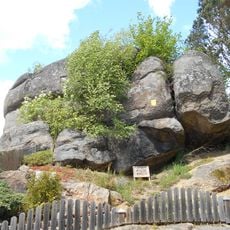
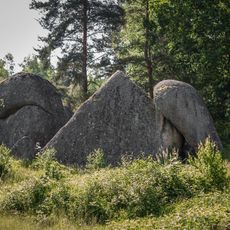
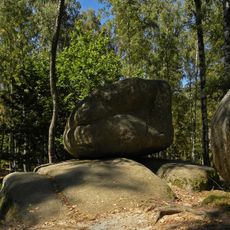
Blockheide is a heathland nature reserve near Gmünd in the Waldviertel, where granite blocks shaped by wool-sack weathering stand among small fields, dry silicate grasslands and mixed woods of Scots pine, birch and oak. A 23.2 m wooden tower with 117 steps rises above the former 1908 water reservoir, which now holds a diorama exhibition on the birth of the rocking stones.
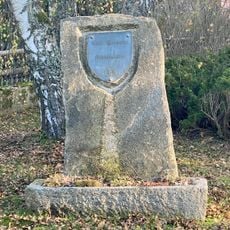
The area was declared a nature reserve in 1960. The nature park was founded in 1964 on the initiative of the Austrian sculptor Carl Hermann, when plans existed to blast the granite blocks to ease agricultural work. Since 1999 it has been part of the FFH area Waldviertler Teich-, Heide- und Moorlandschaft.
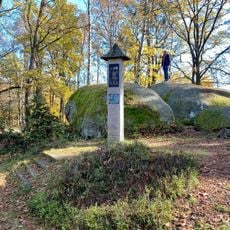
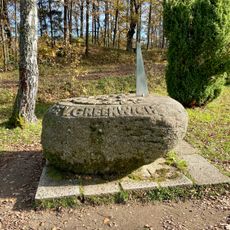
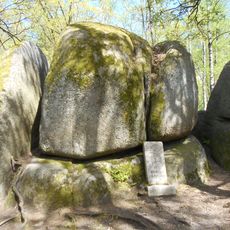
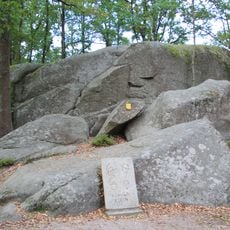
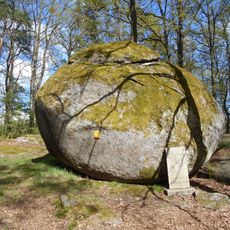
The granite blocks here carry names like Christophorusstein and Teufelsbett that come from local stories and traditions passed down through generations. These names show how people in the region have understood and connected with this landscape over time.
The park has three entrances: at Grillenstein by the Schüsselwirt, with a large car park; at the Backhausen textile factory in Hoheneich, from whose customer car park a path leads over the Braunaubach into the Blockheide; and behind the Malerwinkel. The tower's 117 steps climb to a platform at 20.35 m.
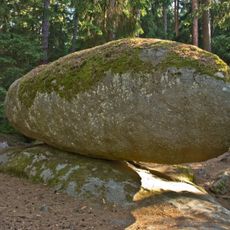
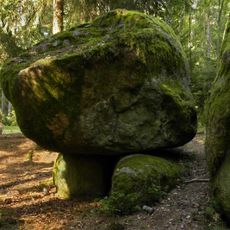
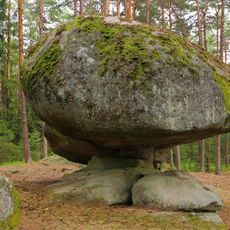
The park features Wackelsteine, massive granite boulders balanced on tiny contact points that can actually rock back and forth when touched. These unusual formations developed over millions of years through erosion and weathering, showing how granite shapes into such remarkable structures under certain conditions.
The community of curious travelers
AroundUs brings together thousands of curated places, local tips, and hidden gems, enriched daily by 94,069 contributors worldwide.