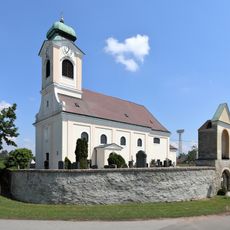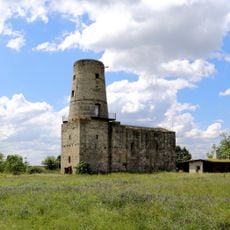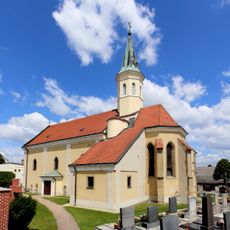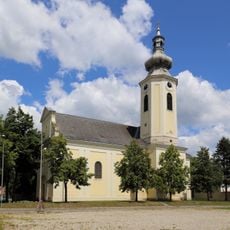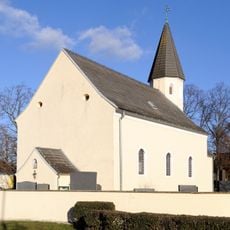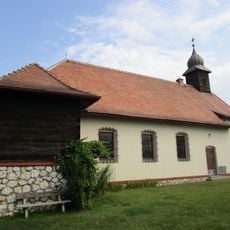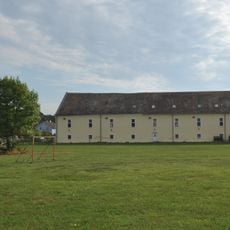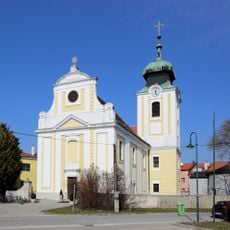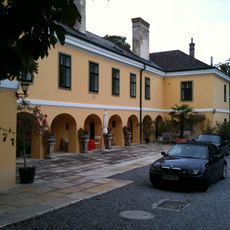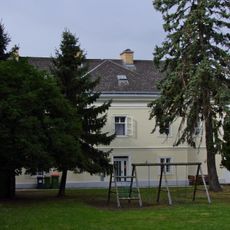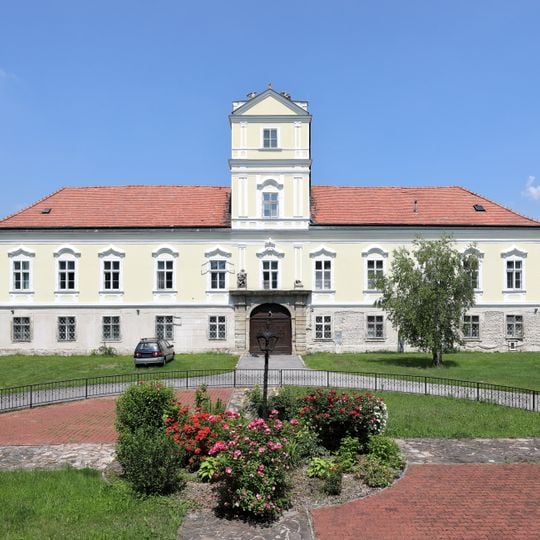
Schloss Obersiebenbrunn, Castle and museum in Obersiebenbrunn, Austria.
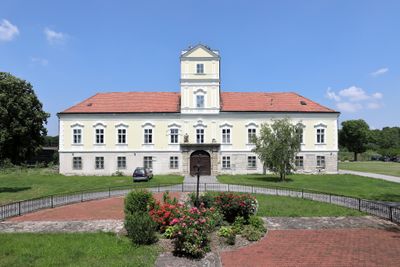
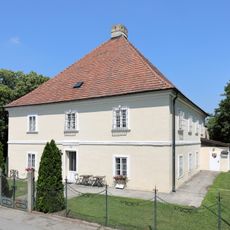
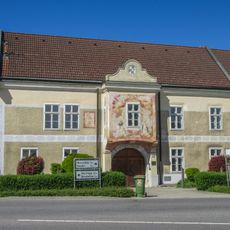
Schloss Obersiebenbrunn is a four-wing baroque complex arranged around a rectangular courtyard with a southern gate tower and enclosed by walls. The building sections form a closed structure that creates a central space, displaying the typical layout of a grand residence from that era.
The oldest surviving mention of the predecessor building dates from 1343; in the 17th century Georg Wilhelm Jörger had it rebuilt in early Baroque style. In 1725 Emperor Charles VI bought the estate and gave it the same year to Prince Eugene of Savoy, who had Lucas von Hildebrandt baroquify the 17th-century building between 1725 and 1736. The Kollonitsch counts held it until 1874, when it passed to the Archdiocese of Vienna; the Coptic Church acquired it in 2001.
Since 2001 the complex has belonged to the Coptic Church, which set up the Monastery of St. Anthony and a Coptic Museum on the premises. The museum presents the Egyptian Christian community, its liturgy and its history to visitors. The former residence thus serves a religious order again, and the monastery is still active today.
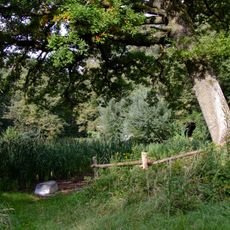
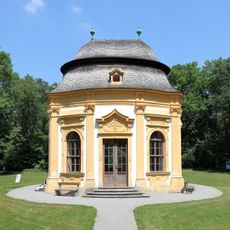
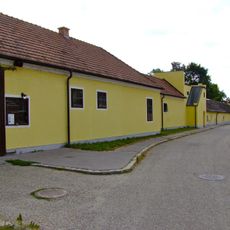
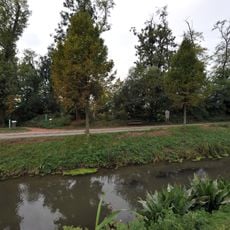
The baroque park north of the castle, a 4.26-hectare former hunting park, is a protected nature reserve and garden monument; eight avenues radiate from the 1728 garden pavilion at its centre. The pavilion, designed by Johann Lucas von Hildebrandt, was thoroughly restored in 1965. The estate buildings west and east of the castle are partly used by a riding club.
The garden is a 4.26-hectare hunting park laid out around 1725 by the fountain engineer and garden designer Dominique Girard, with eight avenues radiating star-like from a central pavilion. It survives complete in its layout and is protected both as a garden monument and as a nature reserve.
The community of curious travelers
AroundUs brings together thousands of curated places, local tips, and hidden gems, enriched daily by 93,943 contributors worldwide.