Mussen, Nature reserve and mountain in Kötschach-Mauthen, Austria
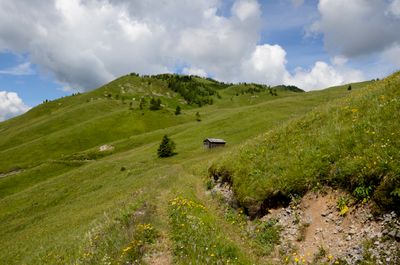
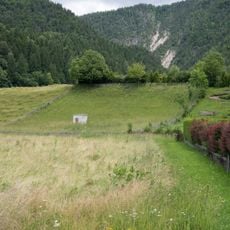
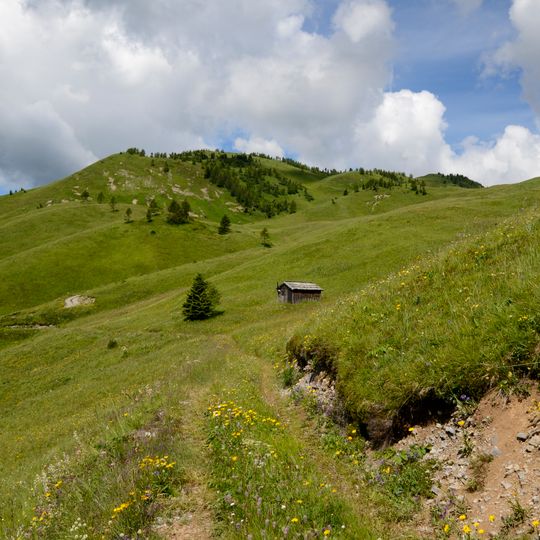
Mussen, also called Auf der Mussen, is an alpine pasture area at 1855 m above sea level in the Lesachtal valley of Carinthia, west of the Gailbergsattel, entirely within the municipality of Kötschach-Mauthen. The 387-hectare site consists of 97% pasture, mainly mountain hay meadows and alpine and subalpine limestone grassland, and 3% heath with dwarf pine and hairy rhododendron. Below the pastures, montane beech forest gives way to larch forest, with the tree line at about 1500 m.
The area lies near the Via Iulia Augusta, an important trade route that connected the region to southern territories during Roman times. This ancient passage shaped the economic patterns of the valley for many centuries afterward.
The name Mussen comes from the alpine pasture, and the meadows were traditionally mown once a year to secure winter fodder for farmers from the Lesachtal villages of St. Jakob, Strajach and Podlanig. Today the central part is mown every two years to prevent scrub encroachment. The area is called Carinthia's "flower mountain" because over 600 plant species grow here.
Multiple hiking trails wind through the reserve at different elevation levels, and visitors should be prepared for changing weather conditions that can shift rapidly at higher altitudes. Sturdy footwear and layered clothing help you move comfortably across the varying terrain and temperature zones.
The Mussen is called Carinthia's "flower mountain": over 600 plant species have been recorded, and nearly 1,100 species in total, including 670 butterflies. In 1999 the small moth Elachista wieseriella was newly described from here. The reserve covers 387 hectares and lies entirely within the municipality of Kötschach-Mauthen.
The community of curious travelers
AroundUs brings together thousands of curated places, local tips, and hidden gems, enriched daily by 93,914 contributors worldwide.