Pfarrkirche Schöngrabern, Romanesque parish church in Grabern, Austria
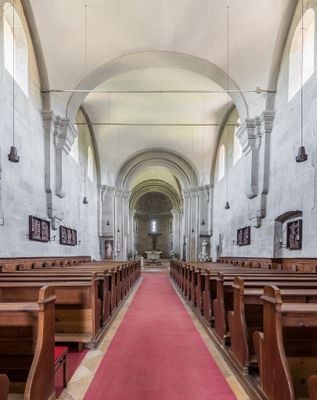
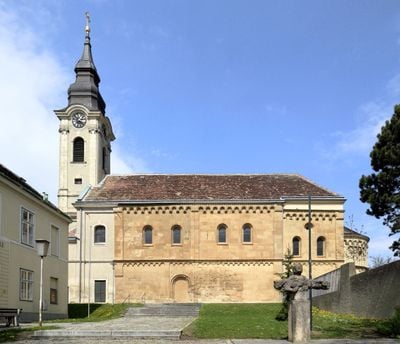
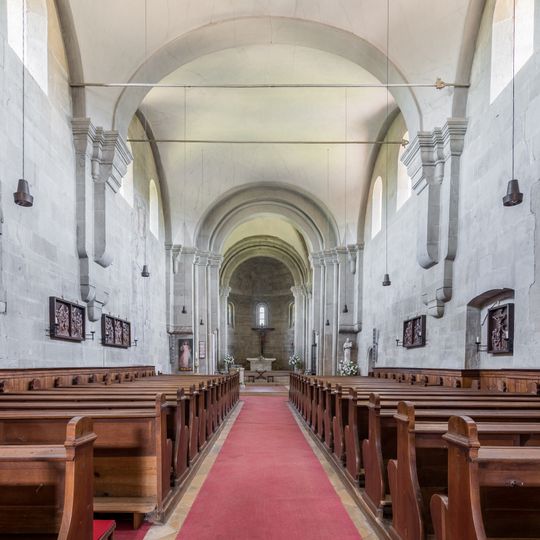
Pfarrkirche Schöngrabern is a late Romanesque stone church set on a low hill in the village of Schöngrabern, in the northern part of Lower Austria. It is known for the carved stone reliefs covering its exterior apse, and inside there are Gothic wall paintings alongside an organ dating from the early 19th century.
The church was most likely built between 1210 and 1230, possibly ordered by Hadmar II of Kuenring as an act of penance for his role in capturing King Richard the Lionheart. Over the following centuries, Gothic additions were made to the original Romanesque structure.
The carved stone figures on the outer wall of the apse tell stories from Christian tradition in a way that anyone walking past can follow. This kind of open-air decoration served as a visual teaching tool for the local community in the Middle Ages.
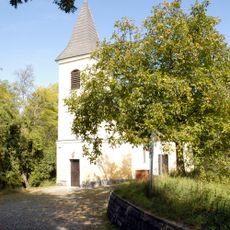
The church stands on a low hill at the edge of the village and is easy to spot and reach on foot. Take your time on the outside first, since the carved reliefs on the apse reward a slow look before stepping inside to see the wall paintings.
Excavations carried out between 1975 and 1978 uncovered priest graves from the 17th and 18th centuries as well as the original Romanesque altar table. That altar table is one of the very few surviving examples from the early building phase still found in the region.
The community of curious travelers
AroundUs brings together thousands of curated places, local tips, and hidden gems, enriched daily by 91,100 contributors worldwide.