St. Leopold, church building in Lower Austria, Austria
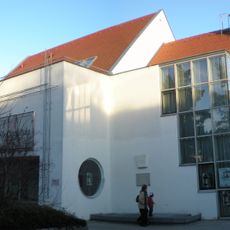
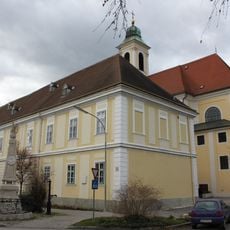
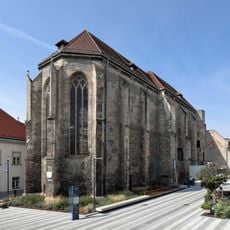
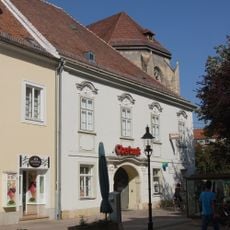
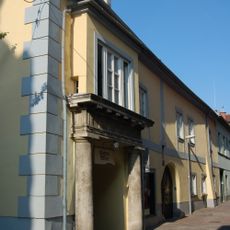
St. Leopold is a late-baroque hall church built from 1737 to 1743 outside Wiener Neustadt's former Vienna Gate, with a Jesuit college attached to its east by an upper-floor corridor. The square nave has two oval-vaulted bays, a southern porch with gallery and tower facing Wiener Straße, and a square choir to the north. The 1840s organ with 10 stops is by Christoph Erler.
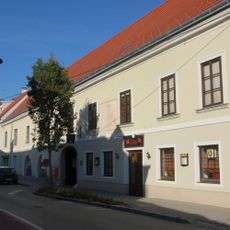
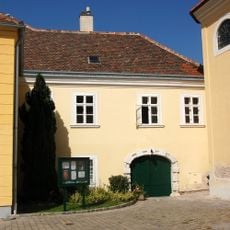
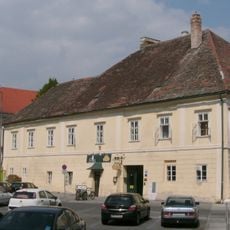
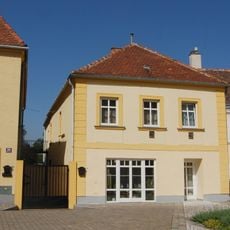
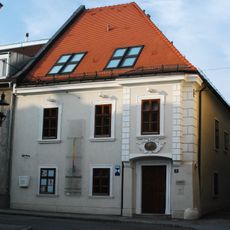
The church was built from 1737 to 1743 and consecrated in 1745, financed by the will of Field Marshal Lieutenant Franz Leopold von Zungaberg, who died in 1735. After the Jesuit order was suppressed in 1773, the church became a parish church in 1791. The adjoining former Jesuit college became a salt office in 1773, served as a military hospital from 1783 to 1903, housed the city museum from 1904 to 1990, and has been the city archive since 1992.
The church is dedicated to Saint Leopold, financed by the will of Field Marshal Lieutenant Franz Leopold von Zungaberg, who died in 1735. The upper-floor corridor linking the church to the former Jesuit college remains visible. In the basement since 1984 is the meeting room of the Catholic Austrian student fraternity Babenberg, a member of the Mittelschüler-Kartell-Verband.
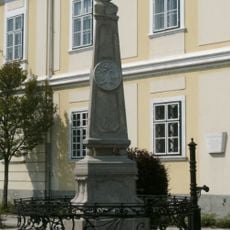
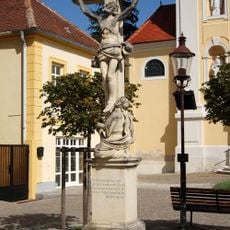
The church sits outside the old city walls along Wiener Straße, a main road that is easy to reach. The square in front of the church is open, allowing free access to the building and nearby monuments including the baroque cross and remains of the Roman road.
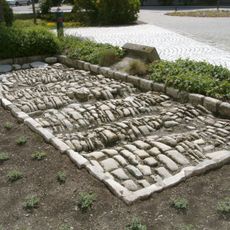
The church was built on top of remnants of a Roman road that once connected Vienna to other regions, and traces of this ancient path are still visible on the church square today. Since the 1980s, the church basement has housed a meeting room for a Catholic student fraternity called Babenberg, which continues to use the space.
The community of curious travelers
AroundUs brings together thousands of curated places, local tips, and hidden gems, enriched daily by 94,132 contributors worldwide.