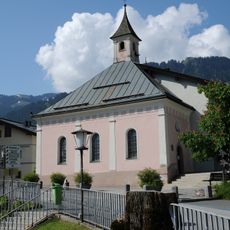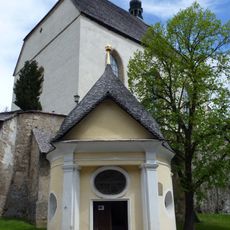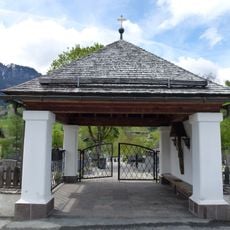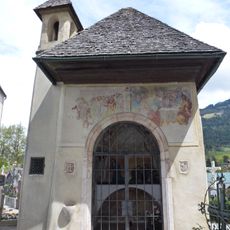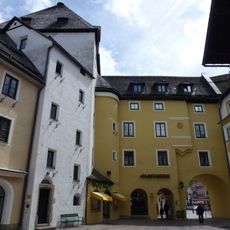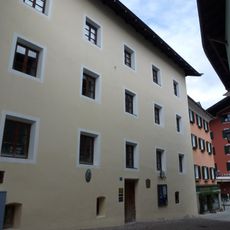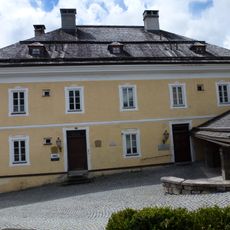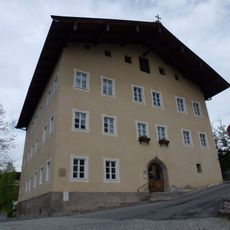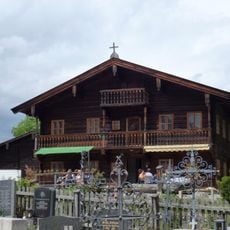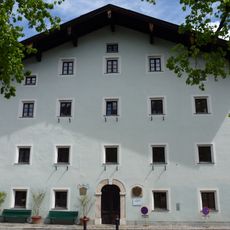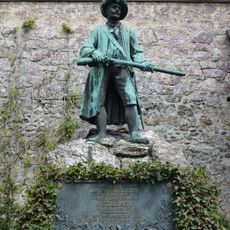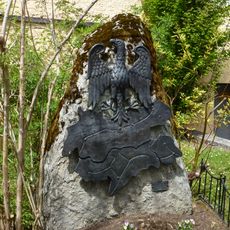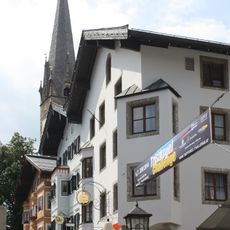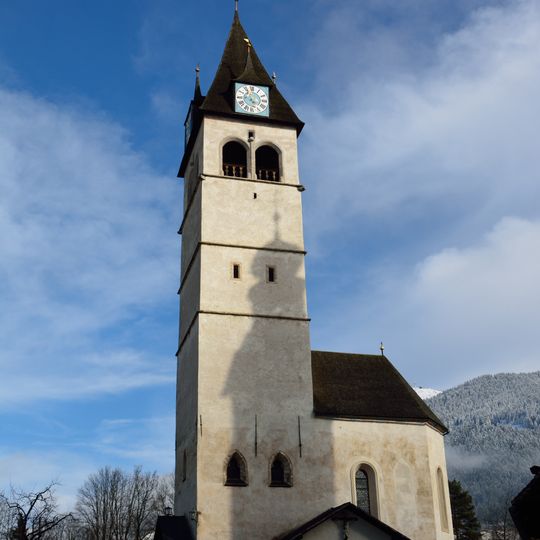
Liebfrauenkirche, Gothic church in Kitzbühel, Austria.
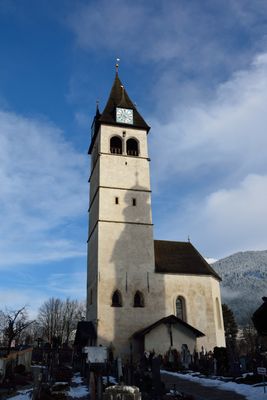
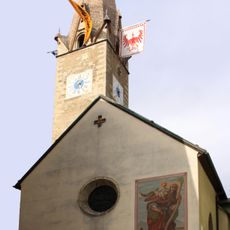
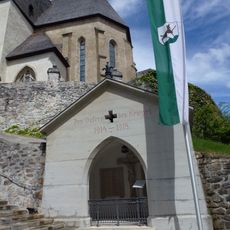
The Liebfrauenkirche is a small Gothic church with a lower church and a 48-metre bell tower built by Wilhelm Egarter between 1566 and 1569. The tower divides the upper church into a vestibule under the tower and a nave with a polygonal choir. The lower church contains a charnel house.
The Liebfrauenkirche was built as a High Gothic cemetery chapel, probably in the second half of the 14th century, and was first documented in 1373. From 1566 to 1569 Master Wilhelm Egarter added the 48-metre tower above the western part, because a large bell acquired around 1518 was too big for the parish church's slender Romanesque tower. The Baroque high altar with the miraculous image followed in 1702, and the interior was remodelled in Baroque style in 1738–1740.
The church is also called a pilgrimage church because of the Gnadenbild on the high altar, a copy made around 1630 of Lucas Cranach's Innsbruck Maria-Hilf image. In the vestibule, votive panels recall pilgrimages and answered prayers, the oldest testimonies dating to 1732. The carved pews of 1720 show lions, grimacing faces and acanthus scrolls.
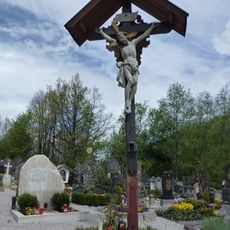
The church stands in the old cemetery directly beside the Stadtpfarrkirche St. Andreas, so both can be seen on one stop. The 48-metre tower is the town's landmark and holds the two large bells of the Kitzbühel peal, including the 6374 kg Kaiserglocke. The lower church contains the Karner; the upper church is reached through the vestibule under the tower.
The vestibule holds many votive panels dating back to 1732 that record prayers and wishes left by visitors. These hand-painted or carved tablets tell personal stories of people who came seeking help or giving thanks.
The community of curious travelers
AroundUs brings together thousands of curated places, local tips, and hidden gems, enriched daily by 93,655 contributors worldwide.