Kapuzinerkloster in Innsbruck, Protected monastery in Innsbruck, Austria
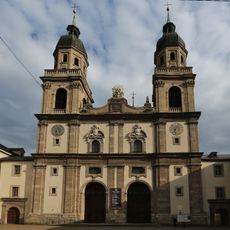
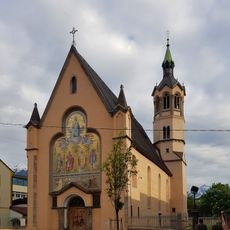
The Capuchin Monastery in Innsbruck stands at the corner of Kaiserjägerstraße and Kapuzinergasse in the Innenstadt district. Its church has a plain barrel vault, and the interior, designed by Franz Pöhacker, uses simple wooden furnishings. The high altarpiece, painted in 1606 by the Capuchin Cosimo da Castelfranco, shows the Adoration of the Magi.
Founded in 1593/94 by Archduke Ferdinand II and his second wife Anna Caterina von Gonzaga, it is the oldest Capuchin monastery in Austria and Germany. The church and high altar were consecrated on 18 December 1594 by Georg Benigni, auxiliary bishop of Brixen. Suppressed under Joseph II from 1787 to 1802, it was bought back by Johann Nepomuk von Zimmermann and re-consecrated in 1802. It was suppressed again from 1940 to 1945.
The name comes from the cappuccio, the pointed hood of the Capuchin habit. In the church, the left niche holds the tabernacle and the right the Gospel book, with ambo and altar side by side. The Marienkapelle keeps a Maria lactans painted by Lucas Cranach the Elder between 1525 and 1530, brought here in 1629 from the Straubing monastery and the oldest publicly venerated Marian image in Innsbruck.
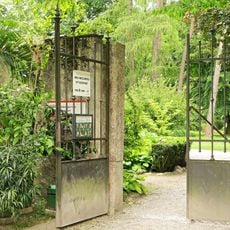
The monastery is located directly in the inner city and is easily reached on foot. The attached church is open to visitors, though some areas like the gardens have limited public access.
The monastery was forced to close during Joseph II's reign but was later purchased and completely restored by Johann Nepomuk von Zimmermann. This rescue allowed it to survive and function as an active religious center to this day.
The community of curious travelers
AroundUs brings together thousands of curated places, local tips, and hidden gems, enriched daily by 93,067 contributors worldwide.