Burgruine Kronsegg, Castle ruin in Langenlois, Austria.
Burgruine Kronsegg is a castle ruin on a steep rocky ridge above the Loistal valley, at the edge of the Gföhler Wald. Its outer walls enclose an area of 50 by 16 metres. The main components are a gate tower with chapel, two bergfrieds, a palas, several inner courtyards and a four-storey residential tower from the 15th century, measuring 15 by 8 metres.
Kronsegg was probably built by the Lords of Maissau around 1200 and is first documented as "Chranzek" around 1250 as a Passau possession. In 1354 Ulrich der Neidegger sold the fief to Eberhard V. von Walsee, who had older parts incorporated into a new building. From the late 14th century it passed as dowry to the Margraves of Brandenburg-Hohenzollern and remained a foreign enclave in Habsburg territory until 1783.
The name Kronsegg combines Middle High German "kranz", meaning the best and most beautiful in knightly usage, with "ekk", meaning edge or mountain ridge. Together they carry the same sense as "Schönberg" (beautiful mountain). The castle was first recorded around 1250 as "Chranzek".
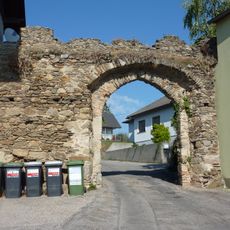
The ruin stands above the Loistal valley at the edge of the Gföhler Wald, in the Kronsegg part of Schiltern in the municipality of Langenlois. The outer gate on the west side, once reached over a drawbridge, leads through three walled forecourts to the main castle. The site is open for free visits from Easter to the end of October.
The two square bergfrieds differ greatly: the western one, with 8-metre sides and walls over two metres thick, is far more massive than the tower beside the gate. The gate tower holds a two-storey Gothic chapel first mentioned in 1429, with a cross-ribbed vault and a weathered keystone bearing the arms of the Schad von Lengenfeld family.
The community of curious travelers
AroundUs brings together thousands of curated places, local tips, and hidden gems, enriched daily by 94,137 contributors worldwide.