Hügelgräberfeld Winkling, Ancient burial ground in Kronstorf, Austria
The Hügelgräberfeld Winkling is a prehistoric burial site in the Upper Austrian landscape near Kronstorf with multiple raised burial mounds scattered across a larger area. The mounds vary in size and shape, showing the different burial methods used by earlier populations.
The burial field was discovered in 1926 by Franz Hörnisch, then the community doctor of Hargelsberg. It consists of about 100 mounds from the Middle Bronze Age and is a protected monument. The richest grave goods came from Tumulus 1: two four-spoked wheel pendants and three bronze pins, two of them 26 cm long.
The field lies in the Winkelholz forest, and a panel on one of the forestry tracks explains the site. The most notable grave goods come from Tumulus 1: two four-spoked wheel pendants and three bronze pins, two of them 26 cm long with ribbed decoration. The broken loops on the pendants show they were worn as amulets or jewellery.
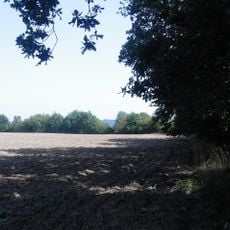
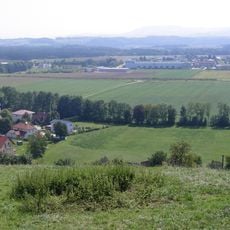
The burial field lies in the wooded Winkelholz area within a bend of the Enns, which runs 500 to 1,100 metres away to the north, east and west. An information board stands on one of the forest tracks through the wood. The mounds are reached on foot along these paths.
The most notable grave goods came from Tumulus 1: two four-spoked wheel-shaped bronze pendants and three long bronze pins. The broken loops on the pendants show they were worn as amulets or jewellery. Such wheel pendants in a Middle Bronze Age mound are so far without parallel in Upper Austria.
The community of curious travelers
AroundUs brings together thousands of curated places, local tips, and hidden gems, enriched daily by 94,328 contributors worldwide.