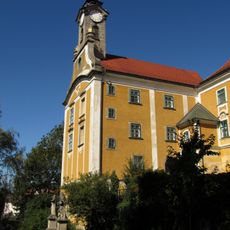
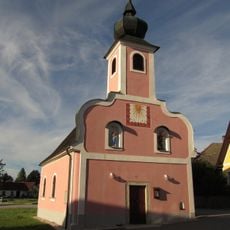
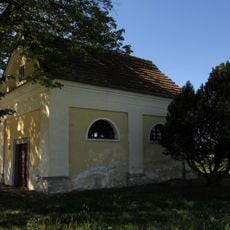
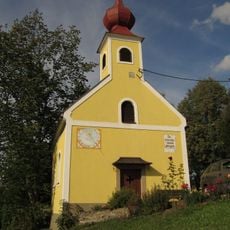
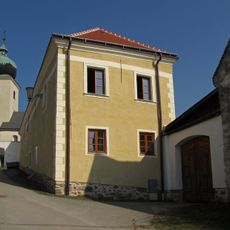
Schloss Kirchberg am Walde, Baroque château in Kirchberg am Walde, Austria
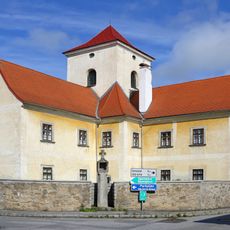
Schloss Kirchberg am Walde is a multi-part castle built around a medieval four-wing core on irregular terrain south of the village. Its west wing connects to the castle church above a rising rock, the east side has a forecourt with the so-called Kleines Schloss, and the south holds the economic yard. A Gothic remodelling is visible in the inner courtyard, and corner towers mark the 16th-century Renaissance layout.
A castle was documented at Kirchberg am Walde in 1172, held by the lords of Kirchberg in the 12th century. From 1489 to 1555 it belonged to the Hohenfeld family, then briefly to Dietmar von Losenstein (1556–1561), the Sondernhof family (1561–1607), the Kollonitsch barons (1607–1707), the Kuefstein counts (1707–1752) and the Veterani-Mallenthein counts (1752–1828). Between 1828 and 1869 French nobles, including Count Maximilian d’Orsay and the dukes of Blacas d’Angoulême, stayed here, as did King Charles X and the Duke of Bordeaux. The Fischer Ritter von Ankern family has owned it since 1867.
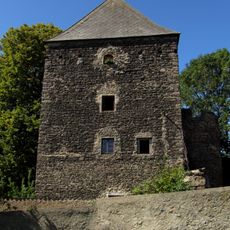
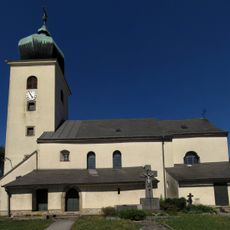
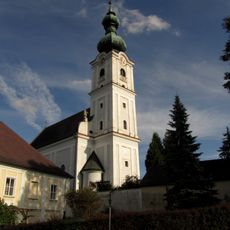
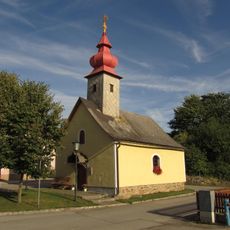
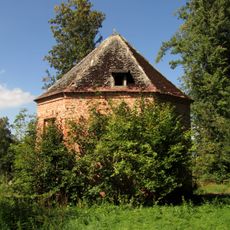
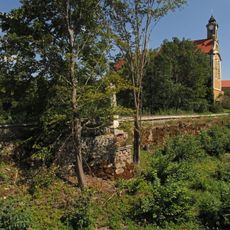
The castle church, consecrated in 1733, is joined to the west wing by a structure built over a rising rock, so the church and residence form one connected complex. In the courtyard, Gothic masonry from an earlier rebuilding phase remains visible. The small castle east of the main quadrangle grew out of the late-medieval economic yard, whose defensive tower survives.
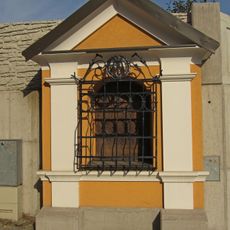
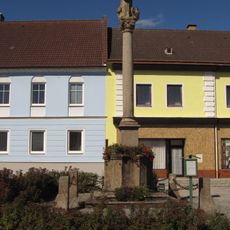
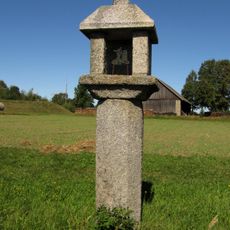
The castle stands on a terrain step south of the village centre of Kirchberg am Walde, in the Gmünd district of Lower Austria. The complex is grouped around a courtyard, with the castle church to the west, the Kleines Schloss and its forecourt to the east, and the Wirtschaftshof to the south. Near the fork of the road to Hollenstein, by the rear of the former Meierhof, stands a Lichtsäule that was moved there when the road was straightened and widened.
A "Lichtsäule" stands behind the former Meierhof near the fork of the road to Hollenstein. According to older Kirchberg residents, it originally stood in the middle of the junction of the two roads and was moved to its present spot when the road was straightened and widened.
The community of curious travelers
AroundUs brings together thousands of curated places, local tips, and hidden gems, enriched daily by 95,037 contributors worldwide.