Ulrichskapelle, Heritage chapel in Heiligenbrunn, Austria.
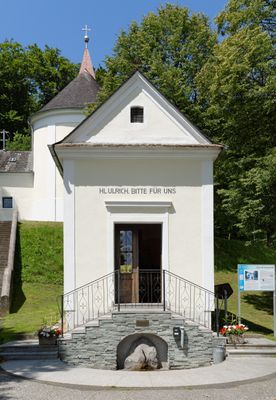
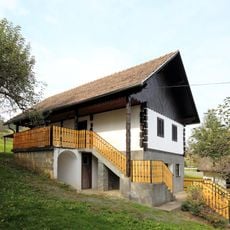
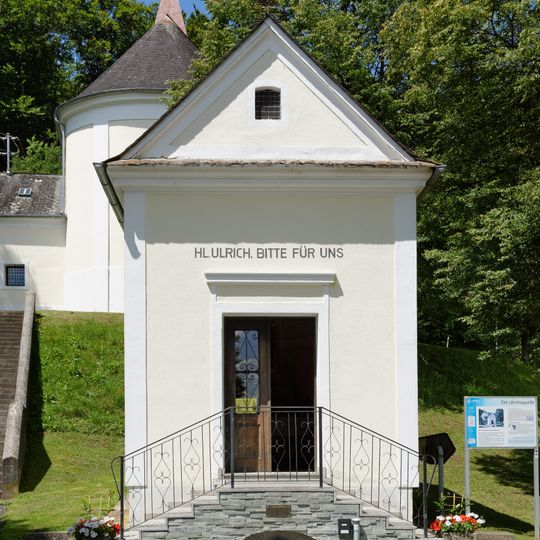
Ulrichskapelle is a single-nave brick chapel with a pitched roof and a polygonal apse to the west, built in 1925–1926 on the site of an earlier wooden chapel. Its east gable facade has an entrance portal preceded by an external staircase added in 1975, which now houses the spring outlet. The vaulted interior is fully painted, with a masonry altar carrying a wooden tabernacle structure flanked by two angel figures and an altarpiece of Saint Ulrich beneath a starry choir vault.
A charter of 1198 first records a chapel at the Holy Spring, when King Emeric confirmed its donation by Bishop Ugrinus of Raab to the Cistercian abbey of Szentgotthárd. A chapel dedicated to Saint Ulrich is named in 1757. The wooden chapel with a stone altar was replaced by the present brick building in 1925–1926, and the exterior stair with the spring outlet was added in 1975.
The name Heiligenbrunn (Hungarian Szentkút, Croatian Šenkut) comes from the spring shrine, once called the Heiliger Brunnen, that gave the village its name. Pilgrims still fill bottles with the spring water, to which healing power is attributed, especially for eye ailments. The feast of the chapel's patron, Saint Ulrich, falls on 4 July.
The chapel is located in Heiligenbrunn and accessible via the regional road network. Visitors should plan to arrive by car since the village is small and rural with limited public transport options.
The spring chamber lies beneath the chapel's nave, and its shaft cover is set into the tiled floor at the centre of the room. The water is drawn from an outlet under the external stairway on the forecourt, where visitors still fill bottles. The physician Ladislaus Batthyány-Strattmann treated eye patients with this water.
The community of curious travelers
AroundUs brings together thousands of curated places, local tips, and hidden gems, enriched daily by 93,899 contributors worldwide.