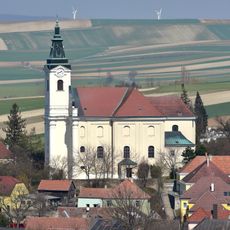
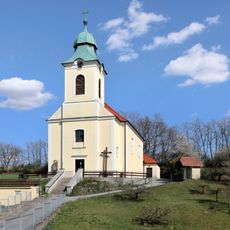
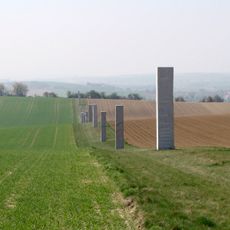
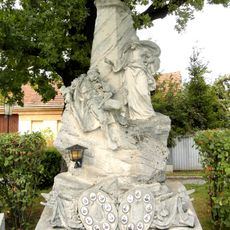
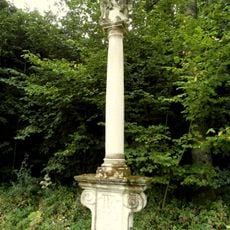
Schwedenhöhlen, Underground cave system in Harmannsdorf, Austria.
Schwedenhöhlen is a set of man-made erdstall passages dug into loess in the Rohrwald forest near Harmannsdorf, Lower Austria. The low tunnels lead to small chambers and niches, and one cave has a dome-like room with seating niches and a decorated column. The entrances are small and partly obscured by weathering and vegetation.
The caves are older than their name suggests: they served as refuges from Hussites, Turks and Hungarians before villagers sheltered in them during the Swedish Wars, shortly before General Torstenson occupied Korneuburg in 1645. They were used again in the Coalition Wars and in the final weeks of World War II. A 1258 Klosterneuburg abbey register records the name "Burgstall" for a hill in the Rohrbach area.
The name Schwedenhöhlen, popularly Schwedenlöcher, recalls the Swedish Wars: villagers took refuge here shortly before General Torstenson occupied Korneuburg in 1645. The caves are much older and also sheltered people from Hussites, Turks and Hungarians, during the Coalition Wars and in the last weeks of World War II. Today the Forestry Administration of Klosterneuburg Monastery owns them.
The entrances are located near Harmannsdorf-Rückersdorf and are marked with signs. Visitors can obtain further information about opening times and access at the municipal office.
Some chambers have specially shaped niches that farmers used for storing grain or root vegetables. The cool temperature and humidity in the loess soil helped preserve perishable food for longer periods.
The community of curious travelers
AroundUs brings together thousands of curated places, local tips, and hidden gems, enriched daily by 94,135 contributors worldwide.