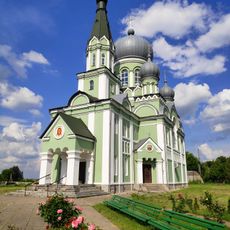
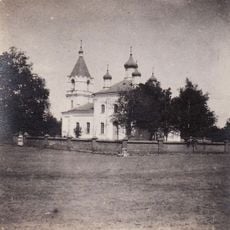
Struve Geodetic Arc, Triangulation network in Northern Europe.
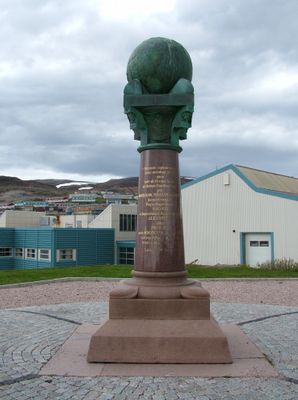
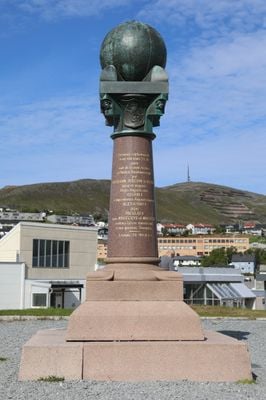
The Struve Geodetic Arc is a chain of surveying points that stretches from Hammerfest in Norway to the Black Sea, spanning a total of 2,821 kilometers (1,754 miles). The 265 measurement points are marked with geodetic monuments containing precise coordinate data and are distributed across several present-day countries.
Between 1816 and 1855, astronomer Friedrich Georg Wilhelm von Struve established this measurement chain to determine the exact size and shape of Earth. The project emerged when precise measurement of the Earth's surface had become crucial for navigation and mapping.
The arc's name honours Friedrich Georg Wilhelm von Struve, the astronomer who directed the chain from Tartu Observatory. Its 34 UNESCO-listed stations are marked by drilled holes in rock, iron crosses, cairns or obelisks, and the surviving points in ten countries are often tended by local communities as historic landmarks.
Only 34 of the 265 original station points are inscribed, and in Russia both lie on Gogland island in the Gulf of Finland, about 180 km from St Petersburg. Elsewhere the markers are drilled holes in rock, iron crosses, cairns or obelisks, often on open ground; check local maps before setting out.
The measurements revealed that Earth flattens at the poles, fundamentally changing how scientists understood the planet's shape. This finding was revolutionary for the science of the time and confirmed theoretical predictions.
The community of curious travelers
AroundUs brings together thousands of curated places, local tips, and hidden gems, enriched daily by 93,346 contributors worldwide.