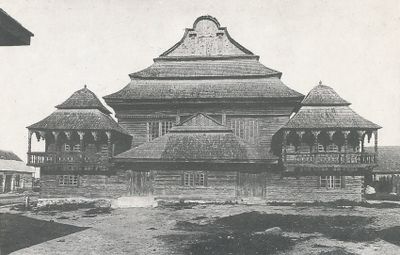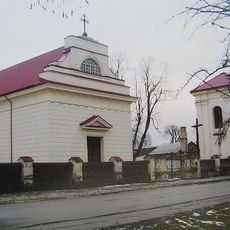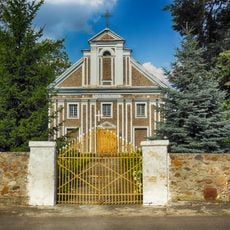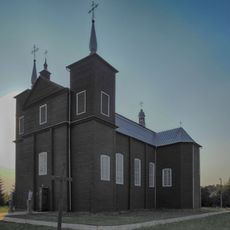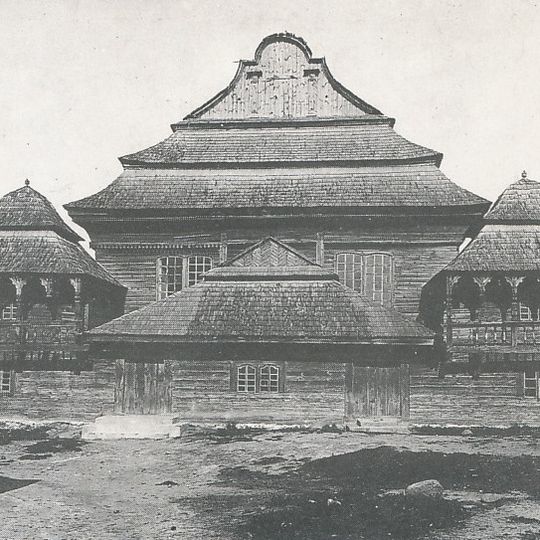
Wolpa Synagogue, Baroque synagogue in Voŭpa, Belarus.
Wolpa Synagogue was a wooden structure built in the baroque style with a distinctive three-tiered roof rising to fourteen meters. The interior featured a dark sapphire-painted ceiling decorated with gold stars, and the walls were painted to mimic classical stone masonry through optical illusion techniques.
Built in 1643, the synagogue served the local Jewish community for over 300 years until World War II. German forces destroyed it in 1942, ending a long chapter of religious practice and community life in the region.
The interior ceiling displayed dark sapphire paint with gold stars, while the walls incorporated Trompe-l'œil techniques to create classical masonry appearances.
The original building no longer exists, but visitors can experience it through virtual reality tours offered by the Belarusian Jewish Cultural Heritage Center. These digital recreations are accessible via web platforms and allow you to explore the interior and architectural details as they once were.
Four corner columns supported an intricate vaulted ceiling system, a structural feature that was typical for wooden synagogues of that era. This design allowed the builders to create a spacious prayer hall without additional internal supports.
The community of curious travelers
AroundUs brings together thousands of curated places, local tips, and hidden gems, enriched daily by 60,000 contributors worldwide.