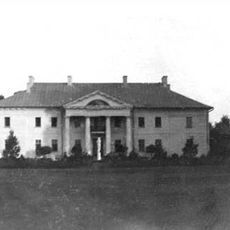
Ula Castle, Medieval castle in Uła, Belarus
Ula Castle was a 16th-century fortress at the confluence of the Ula and Western Dvina rivers. Builders cut a moat across the narrow cape and paved the water-facing slopes with stone. Ivan the Terrible later replaced it with a wooden fortress of eight towers. Today only earthworks and the Batory rampart remain.
Sigismund II Augustus ordered the castle's construction in 1563 to secure the region as a military outpost during the Renaissance. The stronghold played a role in the geopolitical conflicts between neighboring powers.
The name Ula Castle comes from the Ula River, at whose confluence with the Western Dvina it stood. The surviving southern and eastern rampart is called Batory's Shaft after Stefan Batory, who ordered it raised in 1580. Behind it stand the parish church and the priest's buildings, while the former castle courtyard is now occupied by the rector's vegetable gardens.
The site lies at the confluence of the Ula and Western Dvina, at the tip of a promontory cut by a moat. Traces of trenches remain along the riverbanks, and the Batorey Rampart still guards the south and east sides. The former castle courtyard is now occupied by the parish priest's vegetable gardens, so avoid walking through them.
The site is a promontory between the Ula and Western Dvina rivers, cut off by a moat dug to join the two channels. Traces of the ditches survive along the riverbanks, and the earthen rampart called Batory's Shchanets still guards the south and east sides. Behind it stand the parish church and the rectory buildings, while the former castle courtyard is now used as the priest's vegetable gardens.
The community of curious travelers
AroundUs brings together thousands of curated places, local tips, and hidden gems, enriched daily by 94,608 contributors worldwide.