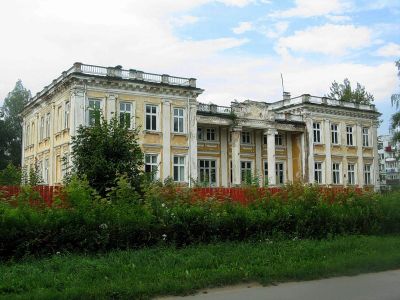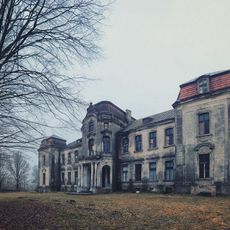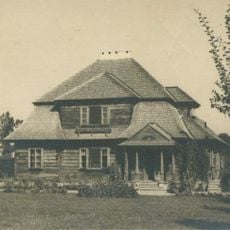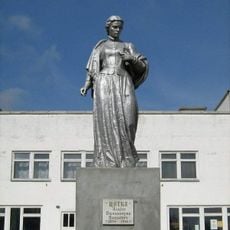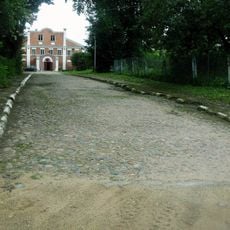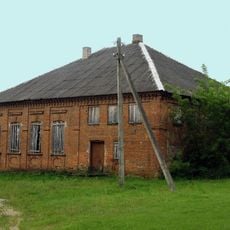
Shchuchyn Palace, Neoclassical palace in Ščučyn, Belarus.
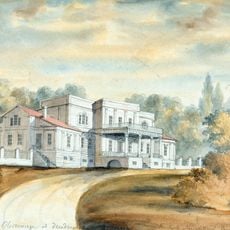
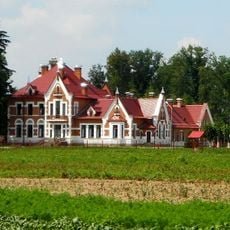
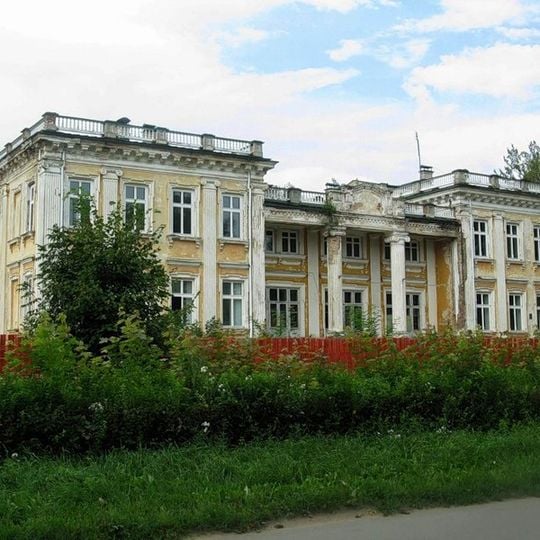
Shchuchyn Palace is a two-storey stone residence on a high plinth, built in the style of late 19th-century St Petersburg neoclassicism with eclectic elements. Its symmetrical main facade has a central recessed bay forming a loggia with two Ionic columns, flanked by two-storey blocks articulated by pilasters. A wide staircase leads to the entrance, and the rectangular windows are framed by cornices.
The first palace on the site was built in the second half of the 18th century to a design by the architect de Fleners, in a regularly planned park laid out by the gardener S. Jundzill, and belonged to the Lithuanian treasurer Shchuk. From the early 19th century it passed to the princes Drucki-Lubecki. The present palace was designed in 1892–1895 by the Vilnius architect Tadeusz Rostworowski for Prince Władysław Drucki-Lubecki (1864–1913); the prince's illness slowed the work, and after his death in 1913 the family did not finish the interiors — the balcony railings were still missing when World War I began.
The palace now houses the Shchuchyn Palace of Children's and Youth Creativity, opened in September 2015 on the Day of Belarusian Written Language. Its first-floor dining room along the park facade was hung with portraits of Polish kings, and its cupboards held family silver and French porcelain. The furnishings were removed in October 1939.
The building is reachable by regional buses from Grodno, which run regularly throughout the day. Visitors should note that access to certain areas may be restricted, so it is helpful to check availability before visiting.
The palace was designed in 1892–1895 by Vilnius architect Tadeusz Rostworowski for Prince Władysław Drucki-Lubecki, but the prince's illness slowed the work, and after his death in 1913 the family did not finish it: the balcony railings were still missing when World War I began.
The community of curious travelers
AroundUs brings together thousands of curated places, local tips, and hidden gems, enriched daily by 94,980 contributors worldwide.