Hrodna Fortress, Medieval fortress in Grodno District, Belarus
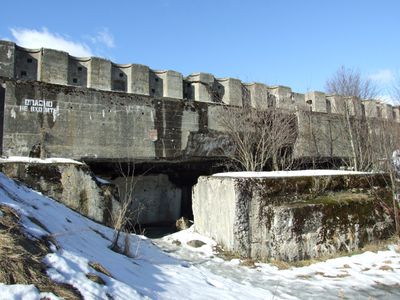
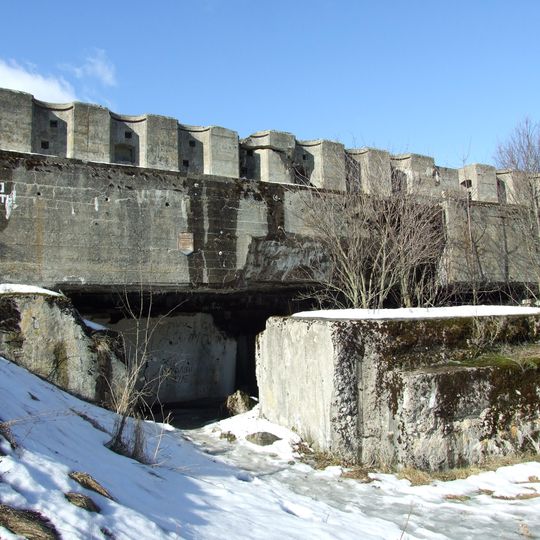
Hrodna Fortress is a system of fortifications around Grodno built in two main phases: five earth-and-timber forts in 1887–1889 and a planned ring of 13 concrete forts begun in 1912. Fort No. 1, on the right bank of the Neman in the Pyshki forest park, is the closest to the centre and can be visited.
Grodno had stone fortifications from the 12th century, when walls enclosed the princely castle. Earth ramparts and ditches were thrown up around the city during the Thirteen Years' War (1654–1667), and Peter I's army strengthened them in 1705–1706, pouring water over the slopes so they froze before Charles XII's Swedes arrived. In 1887–1889 five earth forts were built, followed by two more in the 1890s; a 1912 decree of Nicholas II ordered a new fortress of 13 concrete forts, but none was finished before the Russian evacuation of August 1915.
The forts are named after the villages and suburbs they guarded: Pyshki (Fort I), Dzyevyatowka and Grandzichy (Forts VI and VII), and the Zaneman suburb along the Neman's left bank. Fort II became a site of mass murder of civilians under German occupation in World War II.
The earthwork Fort No. I, the closest to the centre, stands in the Pyshki forest park and can be visited on foot; the other forts lie scattered around the outskirts, so plan transport between them. Ground is uneven and overgrown in places, and the concrete works were never finished before the 1915 evacuation.
The 1912 plan called for 13 concrete forts, 23 numbered strongpoints and 19 lettered strongpoints on an oval line about 60 km long. None was finished before the 1915 evacuation; the Russians blew up most of them, but Fort No. 4 near Strelchaki and a nearby "small" fort survived intact.
The community of curious travelers
AroundUs brings together thousands of curated places, local tips, and hidden gems, enriched daily by 94,926 contributors worldwide.