Suraž Castle, Castle in Belarus
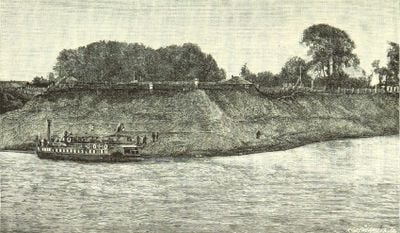
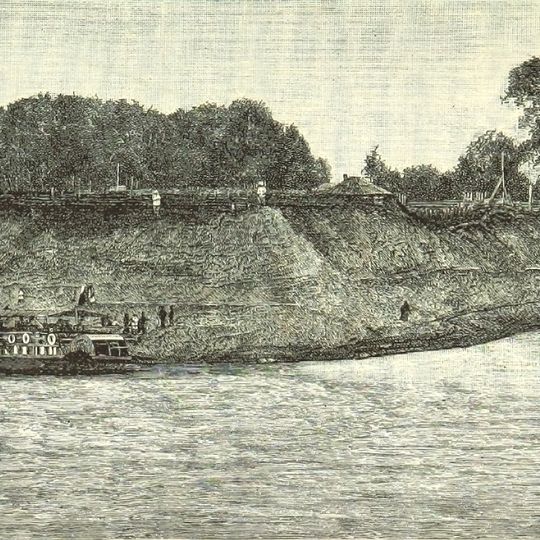
Suraž Castle was a wooden fortress built in 1563 at the confluence of the Kasplya and Western Dvina rivers. It was made of gorodnya log frames, with an earthen rampart up to four meters high and a moat on the north and east sides, while a steep bank protected it along the Kasplya. Maps of 1579 and 1603 show a single two-tier tower.
Built in 1563 by Vitebsk voivode S. A. Zbarazhsky on the orders of Sigismund II Augustus at the confluence of the Kasplya and Western Dvina, the wooden castle was burned by Moscow troops in 1616 and 1633. During the Russo-Polish War it was taken by Russian troops in 1654, retaken by a Suraž uprising in 1655, and occupied again in 1656. The Andrusovo Truce left it in the Grand Duchy of Lithuania and it was rebuilt, but it ceased to exist after 1772.
The castle's name comes from the town of Suraž at the confluence of the Kasplya and Western Dvina. In 1655 its residents rose against the Russian garrison, and the victors took three banners, four wheeled guns of 0.5–3.5 pound calibre, 26 wall guns and much ammunition. After the 1667 Andrusovo truce the fortress stayed in the Grand Duchy of Lithuania and was rebuilt.
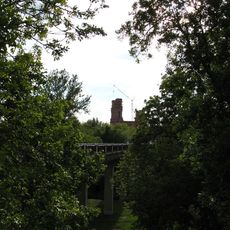
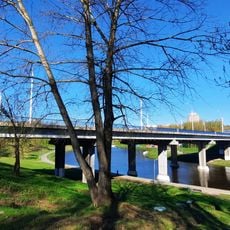
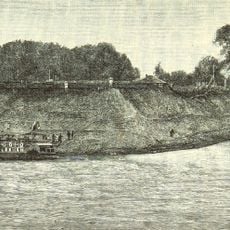
The site lies at the confluence of the Kasplya and Western Dvina rivers, where the steep bank of the Kasplya once formed the castle's natural defence. The earthen ramparts, up to four metres high, and the moat are still visible on the north and east sides. The castle no longer exists above ground, so look for the terrain shapes rather than walls.
In 1656, when Moscow troops retook Suraž Castle, the victors seized three banners, four wheeled guns of 0.5 to 3.5 pounds calibre, 26 wall guns and large stores of ammunition. A 1701 drawing by Maksim Tsyzyryov, steward to Peter I, shows the castle round in plan, without towers, with two bridges over the moat.
The community of curious travelers
AroundUs brings together thousands of curated places, local tips, and hidden gems, enriched daily by 94,607 contributors worldwide.